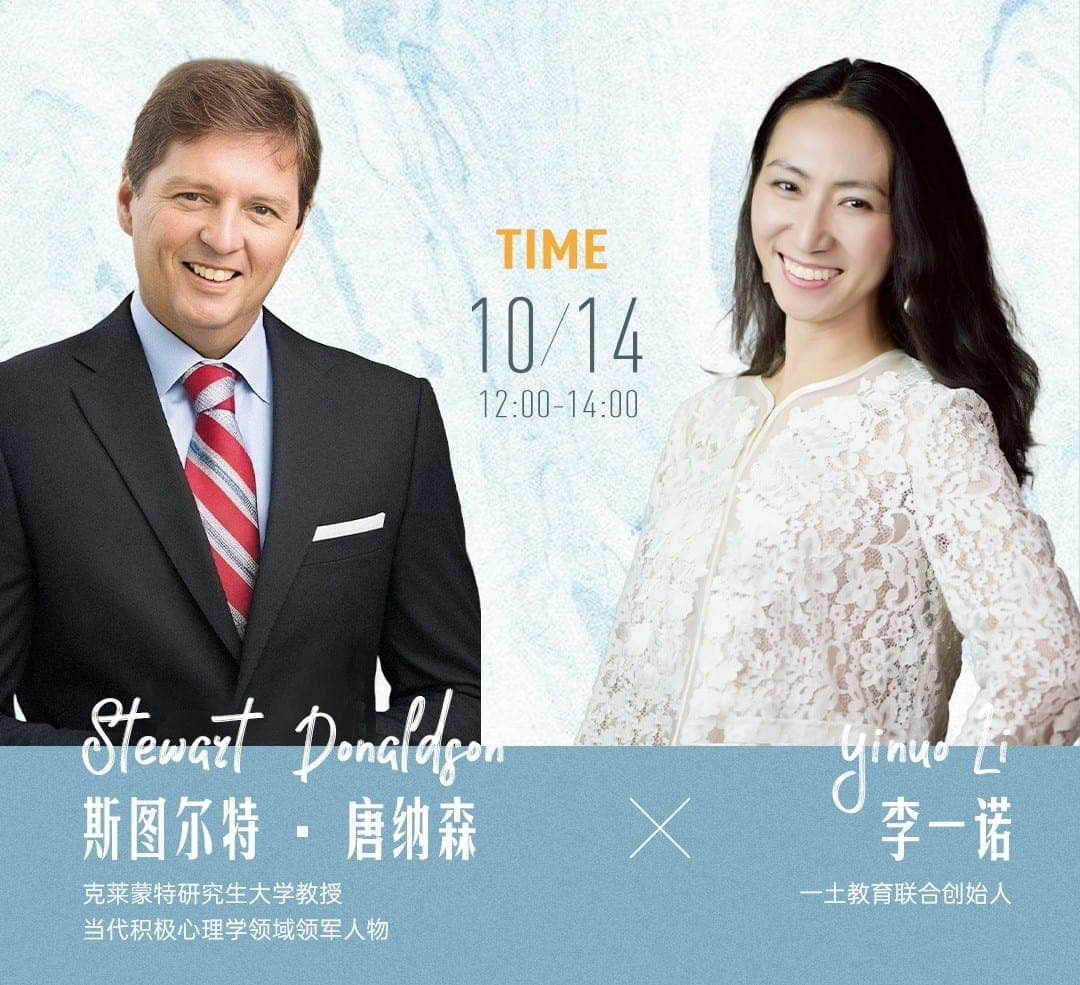
Stewart Donaldson: Live Well in the Age of Algorithms
When we went live in front of the camera, I was holding two versions of the same book—Flow 2.0: the English e-book on my tablet and the freshly published Chinese edition 《心流》 in my hand. The author, P...
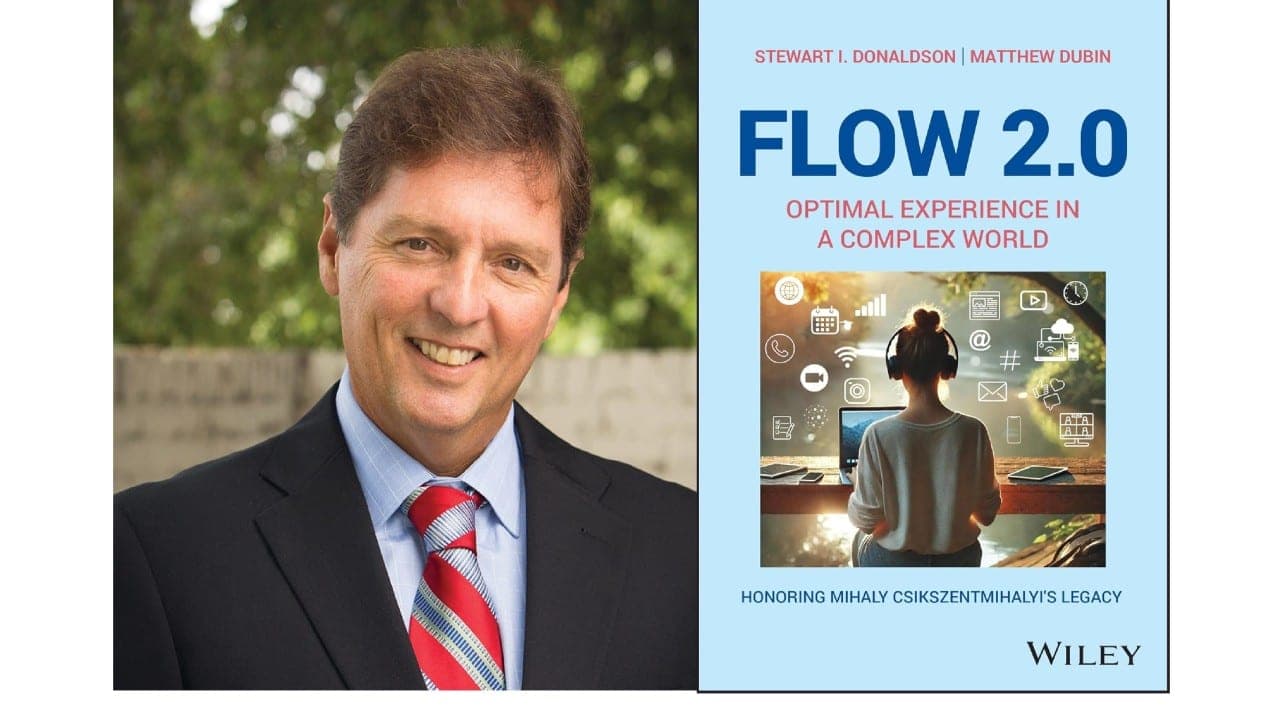
When we went live in front of the camera, I was holding two versions of the same book—Flow 2.0: the English e-book on my tablet and the freshly published Chinese edition 《心流》 in my hand. The author, Professor Stewart Donaldson from Claremont Graduate University, looked at the Chinese copy and joked, “I can't read a word of it. I wonder what they… could have said all kinds of things in this.”
That mix of humor and seriousness captured our whole conversation. We were talking about how to live well in 2025 while algorithms quietly compete for every second of our attention.
From Drucker’s Law to Measuring a Life
I began with Peter Drucker, beloved in China as De Lu Ke(德鲁克) and legendary at Claremont. As a young scholar in the 1980s, Stewart wanted to know how science could have “a profound impact in the world.” He took Drucker’s classes, then slowly became his colleague and neighbor.
He still walks past a bench inscribed with Peter and Doris Drucker’s names and “some of his famous quotes” in a nearby park. One line imprinted itself on him:
“Unless you can measure what you're talking about, you really can't manage it.”
Drucker built management on that idea. Stewart took the same logic into human life. Measurement led him into evaluation, and then, when he met Mihaly Csikszentmihalyi (whom he calls “Mahali”) around 2005, into “measuring… our ultimate meaning and purpose and well being in life, a life, you know, well lived.”
That is the quiet ambition behind Flow 2.0: not just to celebrate happiness, but to study a life well lived with the same rigor we apply to companies and markets.
A Near-Drowning and the Birth of Positive Psychology
Mihaly (米哈里)is less well known in China than Martin Seligman, but his life story shaped this entire field. A Hungarian who survived World War II as a child, he watched adults struggle to rebuild and devoted his work to understanding how we create happiness after suffering.
Stewart met him later as a dean at Claremont. Another university had offered Mihaly “the chance to start the first positive psychology program at the PhD level.” Stewart tried to persuade him to stay—with a very Southern California argument: LA traffic is horrible; Claremont is wonderful. Eventually, Claremont agreed to build that program there.
By then, Mihaly and Seligman were recognized as cofounders of positive psychology. The way they met is almost mythical—and perfectly on theme.
Both were at a resort in Hawaii. Mihaly went out to sea, got caught in a rip current, and was injured on the rocks. A man on the beach pulled him out and walked him back. It turned out to be Seligman. They “had known each other's work, but they never met each other.”
Seligman was preparing his presidential address for the American Psychological Association. The two spent the week asking what legacy they wanted to leave for psychology. Most of the field, they felt, focused on people “who were struggling and suffering. Very important work,” Stewart emphasized, “but at the expense of looking at what are the things in life that really help us flourish.”
Out of that conversation, positive psychology took shape: not blind optimism, but the scientific study of flourishing. Stewart has now spent “over 20 years… scientifically trying to understand… how do we live our best lives possible and how do we help others… flourish in their lives.”
Why We Need Flow 2.0 in 2025
Mihaly’s original Flow was written in a pre-digital age. It focused on those deep states when we’re “fully focus and… kind of at our… peak performance,” absorbed in sport, music, work, or art.
Today, the landscape is different. “Fast forward to 2025,” Stewart said, “and most of us live in a world of really high technology, where all kinds of people are competing for our attention.”
One sentence of his stayed with me:
““If you don't learn the principles in Flow 2.0, pretty much an algorithm or a set of algorithms are running your life.””
He and his coauthors call the new reality “attention fragmentation” and “time confetti”—our days shredded into tiny, scattered pieces of half-focus. If that’s how we live, we spend “very little time in flow.”
He is not anti-tech. In fact, he calls himself “pro technology.” But he insists that the human side—“how [we] interact with the technology”—is now critical. We can’t simply log on and hope for the best.
A Calendar Designed Around Flow
So what does it mean to “manage” attention in real life? I asked him about his own calendar.
He didn’t pretend to be perfect. “I have good days and… days where I'm bouncing all over the place as well.” But he walked us through a “baseline calendar” that is clearly designed for both flow and well-being.
Every morning, he and his wife go to the college track to walk or run for about an hour.
““To get out in nature” is the first priority.”
Then, if there are many demands, he clusters Zoom meetings “from, you know, 9 till noon,” trying to avoid fragmentation. He won’t let an assistant manage his calendar: “It's designed for flow and assistants just take… whatever comes in and… put them on your calendar.”
At midday, there’s another hour of movement—weights, treadmill, or his favorite, swimming. “That really gets me into flow,” he said, and he notices how many problems he works on mentally in the pool.
Afternoons are for deep work—writing chapters, working on new books. Before dark, he and his wife walk their neighborhood again “to get out in nature.” And then he tries not to work further, having seen how late-night work once affected his family.
It struck me that many of us put work at the center and squeeze life around it. Stewart quietly inverts that: he builds the day around flow blocks, physical movement, and relationships, then fits work into those containers.
From Individual Flow to Collective Flow
Many people think of flow as purely private: a lone surfer, a writer at a desk, a gamer in a dark room. One of the most interesting parts of Flow 2.0 is Stewart’s emphasis on “collective flow” or “social flow.”
Mihaly and Seligman loved individual flow—“just get in isolation and write.” Stewart, by contrast, lights up when he works with others. “If you look at my publications,” he said, “most of them are with other people because I love to… get into the state with other people.”
He told a simple surf story. As a young man, he surfed alone and loved the individual flow. Then he had children, taught them, and once they could surf, “there's no better flow than being out there with my kids, enjoying it together.”
In organizations, he prefers being “in a team than in isolation,” working with a “positively energizing leader” toward shared challenges. In sports, research shows that when a team is “all on the same page and working together, you know, they can perform at a level that is way higher than their average level.”
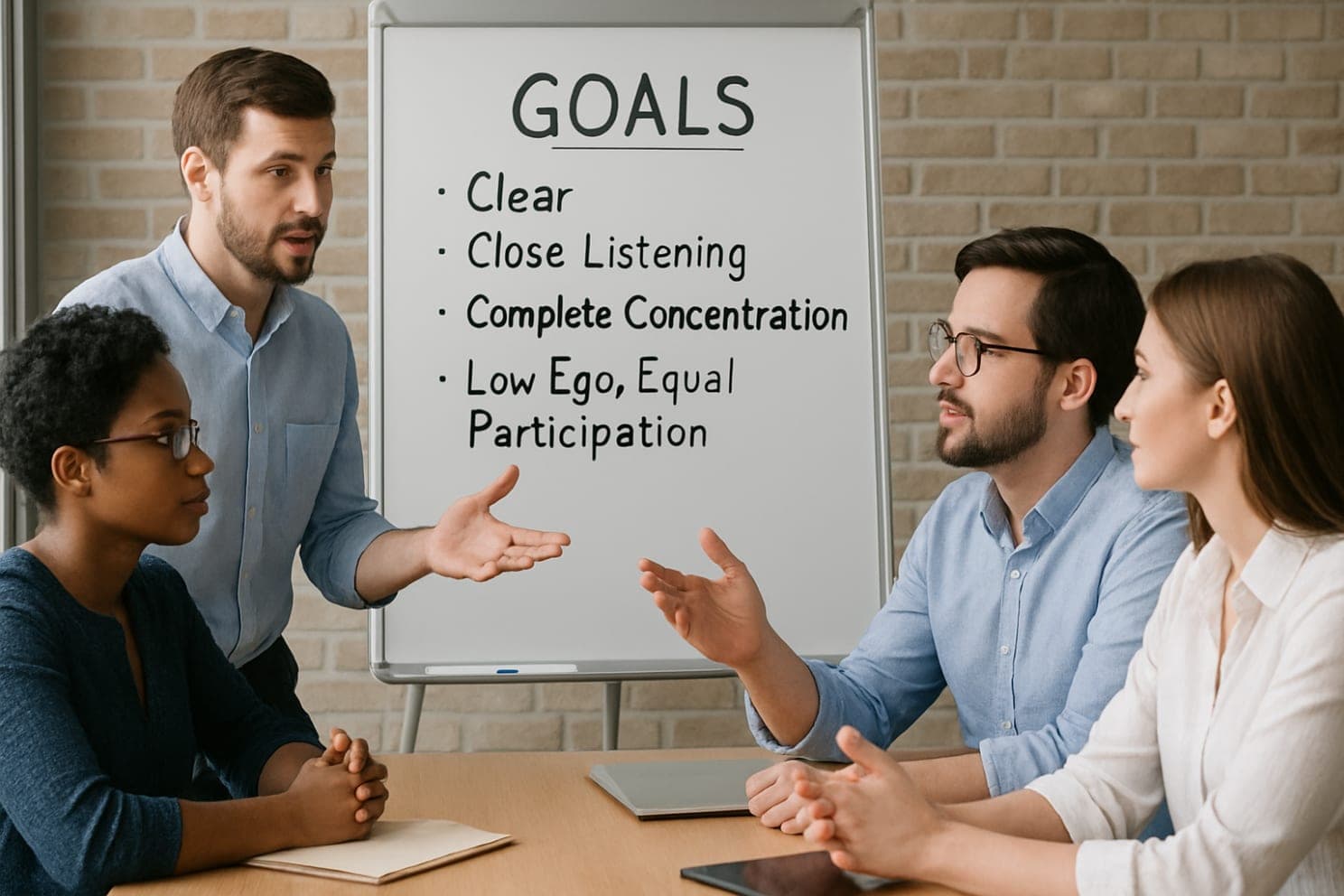
In the book, he lists 10 elements that support collective flow. During the livestream he highlighted a few:
I read aloud Google’s Project Aristotle findings from the Chinese edition: psychological safety, dependability, structure and clarity, meaning, and impact. The overlap is obvious. We tend to call these “soft” factors. Stewart is quietly saying: this is the architecture of group flow—and of outstanding performance.
Skills, Challenges, and Junk Flow
One of Mihaly’s simplest yet deepest insights is the skills–challenge map. On one axis: your skill level. On the other: the challenge you face. When both are high and balanced, you enter the “flow channel.” When skill is high but challenge is low, you drift into boredom. When skill is low and challenge is high, you tip into anxiety.
Stewart admitted he still sometimes oscillates between anxiety and flow. Before facing a huge audience, he might think, “what if I don't… remember what I'm gonna say or… they don't like it.” The key is to “find flow” as quickly as possible; otherwise, he stays stuck in anxiety.
If that’s “true flow,” what about the hours we spend on short videos and endless scrolling? Aren’t those also micro flow moments?
Here Stewart used Mihaly’s phrase: junk flow.
Short videos, games, endless feeds can feel absorbing, but “you're not really… in that… state where your skills and… the challenge is what's getting you into this great state. You're sort of in a passive entertainment… state.” People crave flow so much, he said, that they “try to mimic it with junk flow,” whether via substances in the past or digital distractions today.
He doesn’t say all short video is evil. Instead, he uses his extended PERMA-4 framework—nine building blocks of flourishing—to judge any activity: Does it build positive emotion? Accomplishment? Relationships? Physical health? Economic security?
“It's how you use it that's the key,” he said. The same principle applies to money: “Somebody really wealthy can be insecure and somebody without a lot of money can be so secure… it's how you use your money that's the key.”
The Next Generation
Toward the end, I asked about children. Many people watching were parents, worried about raising kids who are born into this digital ocean.
Stewart pointed to “positive education” and “strength based parenting,” but what moved me most was his new, very personal project: his first grandchild, born five weeks earlier. The baby lives nearby, so he is “babysitting and doing everything I can to help this little baby… flourish,” with all his positive psychology knowledge now in the back of his mind.
He remembers raising his three children “when I knew very little about positive psychology,” mostly improvising. Now he is struck by how easily kids fall into flow “if you set the right conditions. They love to play. They love to be creative.”
Our task, as he sees it, is to design homes, schools, workplaces and calendars that protect and multiply those conditions—for ourselves and for them.
When I think back on our conversation, what lingers is not a single technique but a shift in stance. Instead of letting the “information monster” shape our days, we can deliberately shape three things: how we use technology, how we build our days, and who we enter flow with.
Most of our social ills and challenges, Stewart told me, come from people stuck between boredom and anxiety, reaching for junk flow. The promise of Flow 2.0 is modest but real: to give us language, tools, and stories to move more of our time into that narrow channel where skill meets challenge, attention deepens, and life—quietly, steadily—feels worth living.