Japan Observation: The Radiance and Shadows of Women
This article is the third installment of my observations on Japan, written for Caixin Weekly. It was first published in Issue 18 of Caixin Weekly on May 6, 2024.
This article is the third installment of my Japan observations written for Caixin Weekly. It was first published in Issue 18 of Caixin Weekly on May 6, 2024.
“On the issue of equality, there is no real opposition between men and women. The essence of unfairness towards women is social injustice, and both men and women are victims.”
Lin Yutang once said, "The ideal life in a world of great harmony is to live in an English country house, equipped with American water, electricity, and gas, hire a Chinese chef, marry a Japanese wife, and have a French lover." This was the "ideal life in a world of great harmony" from the perspective of upper-class men a century ago. However, in the social consensus of that era, no one cared whether this was the ideal life for the Chinese chef, the French lover, or the Japanese wife.
But at least it shows that since a hundred years ago, Japanese women have been considered the most suitable for marriage. Even today, this impression likely hasn’t changed much in the minds of East Asian men. If adjectives were to be added to this impression, they would be beautiful, elegant, gentle, hardworking, and capable of managing a household.
The Japanese women I have seen and met in Japan do fit this image. From office workers on the train to housewives shopping in supermarkets, most of them are elegantly dressed and wear delicate makeup. While walking, I often find myself overtaken by mothers riding bicycles, with one child in the front and another in the back, and a basket full of groceries in front. The Japanese working women and scholars I have met are also admirable for their abilities, vision, and professionalism. It can be said that Japanese women truly shine.
But if you look at the data, Japanese women are an "invisible" group. This is another paradox in my observations of Japan that I want to share with you—the contrast between the radiant individual women and the dimly lit collective of women.
Perplexing Gender Inequality
In April 2024, a major news story from the University of Tokyo's entrance ceremony was that the proportion of female students had finally reached 20%. Upon hearing this report, I felt a mix of emotions and jokingly told a professor at the university, "Congratulations to Japan for surpassing Afghanistan!"
A Japanese female friend of mine entered the University of Tokyo as an undergraduate in 2003. She mentioned that the proportion of female students that year was 18%. The goal set at the time was to reach 30% by 2020, but two decades later, this figure has only increased by two percentage points. This negligible change holds no statistical significance. In contrast, world-renowned universities comparable to the University of Tokyo, such as the Massachusetts Institute of Technology (MIT), known for its strength in science and engineering, have a female student proportion nearing 50%, while Tsinghua University has reached 35%, both significantly higher than the University of Tokyo.
So, when I say Japan is worse than Afghanistan, I'm not just joking. The reality is that only countries with extreme fundamentalist systems that institutionalize discrimination against women have lower female enrollment rates in public universities than this figure. In secular nations, including most developing countries, gender imbalances are not this exaggerated. In the 2023 Global Gender Gap Index, Japan ranked 125th out of 146 countries (South Korea 105th, China 107th), dropping nine places from 2022 and hitting a historic low. As the most developed G7 nation in Asia, this fact is truly perplexing.
This friend mentioned that when she entered the University of Tokyo, there were over 20 clubs on campus that were nominally tennis clubs but essentially served as social clubs. Only three of them accepted female students from the university, while the others claimed to admit women but in reality only accepted female students from other universities, with the intention of helping male students at the University of Tokyo find girlfriends. Clearly, these male students did not consider female students at the University of Tokyo as ideal choices for girlfriends or wives. Instead, they preferred female students from women’s universities known for cultivating virtuous wives and mothers—those with good family backgrounds, refined upbringing, average academic performance, and limited future career opportunities.
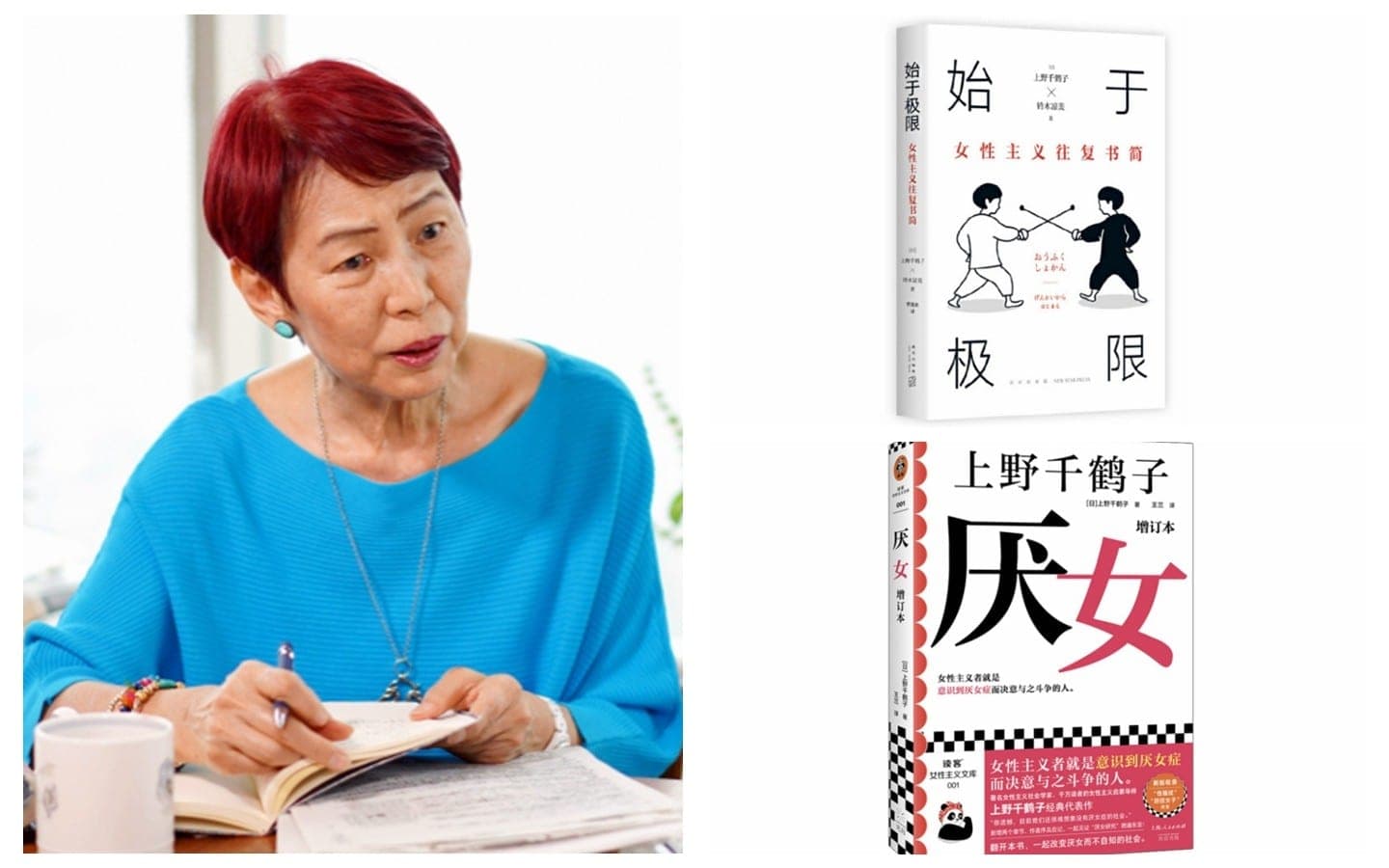
She said that in 2019, Professor Chizuko Ueno mentioned in her opening ceremony speech at the University of Tokyo that in Japan, and particularly at the University of Tokyo, outstanding women face numerous challenges from admission to academic life, campus culture, and societal pressures. Many of her female friends at the university were moved to tears by this: "Being intelligent and capable seems to be a disadvantage, and it’s even a reason for exclusion—what kind of society is this?"
In the areas of compulsory education and health, Japan has achieved social equity between men and women. Compulsory education refers to the period before high school, where girls have the same opportunities as boys to receive compulsory education, ensuring equal enrollment for both genders. Health means that both men and women are not discriminated against when seeking medical care at healthcare institutions, enjoying equal opportunities and treatment. While both of these are positive developments, for a developed country, these indicators can be considered fundamental expectations.
However, Japan faces significant structural barriers in terms of women's economic and political participation, and its scores in these areas are extremely low.
Following the bubble economy of the 1990s, many households found it difficult to cover expenses with just one income, leading to a significant increase in women entering the labor market. In fact, around 80% of women in Japan now work outside the home. However, this does not necessarily translate to economic equality between men and women.
First, more than half of these 80% of women are engaged in part-time work, lacking the benefits of full-time employment and opportunities for career advancement. In other words, they are merely "working" rather than building a "career." In contrast, over 80% of men are employed in full-time positions, with clear pathways and opportunities for career progression.
Furthermore, even for the same job, equal work does not translate to equal pay, with women earning only 70% of what men do. At the same time, due to differences in the nature of work, there is a peculiar inversion between age and salary: men’s wages gradually increase with age, with the lowest earnings occurring between the ages of 25 and 34, and a steady rise from 45 to 55, which aligns with common sense. In contrast, women’s data shows the opposite trend, with their highest wages occurring between the ages of 24 and 35, creating a lamentable phenomenon of "peaking at the start of their careers"—and at a low level at that.
In addition, the spousal tax policy, ostensibly designed to alleviate the tax burden on low-income spouses, has in reality further entrenched the low-income predicament for women. Specifically, if an individual's annual income does not exceed 1.3 million yen (approximately 60,000 to 70,000 RMB), they can be classified as a "dependent family member," exempting them from pension and health insurance payments while also enjoying lower taxes. However, if their income exceeds 1.3 million yen, even by a small margin, they become liable for all these payments. In most households, women are the "low-income spouses," which further restricts their working hours and income.
Among OECD countries, Japan has the most pronounced gender disparity in unpaid labor—household chores. On average, men spend 41 minutes per week on such tasks, while women spend 224 minutes, a difference of 183 minutes. This means women’s unpaid labor time is nearly six times that of men. In other OECD nations, the gender gap is smaller: Sweden (49 minutes), Norway (59 minutes), the United States (105 minutes), and South Korea, which fares worse at 166 minutes. Across all countries, women consistently spend more time on unpaid labor than men. According to United Nations statistics, the global average gender gap in unpaid work is threefold.
In the global gender equality report, Japan's ranking for women's political empowerment is shockingly low, nearly at the bottom, in addition to the rankings in family and workplace.
A female city councilor shared with me her struggles and challenges in the political arena. She told me that although she and her colleagues have made some progress in the local council, women like her remain few and far between at higher national levels. In fact, while women held 15.6% of the seats in Congress in 2023, this figure is far from the over 40% seen in Nordic countries and also falls well below the 28% in the United States.
Women are also underrepresented in the government cabinet. Although there has been recent improvement, with the number of female ministers reaching a historic high, they still account for less than a quarter of the cabinet. While the government has taken measures, such as setting specific target ratios and encouraging political parties to nominate more female candidates, to enhance women's representation in the political sphere, achieving true gender equality requires not only policy support but also a shift in societal attitudes.
During the election season in late March and early April each year, many candidates can be seen campaigning on the streets. I heard a female parliamentary candidate giving a speech on the street, saying, "What we need to change is not just numbers, but also people's mindsets. The long-standing gender roles ingrained in Japanese society have deeply influenced women's choices in both their careers and family lives, especially in the highly competitive field of politics. Now is the time to take action to change this situation!"
Overlooked Women and Exhausted Men
The global gender equality rankings show that Japan's education ranking is 47th—not shockingly low because, at the basic education level (before high school), men and women in Japan have relatively equal access to educational resources. For a developed country, this indicator is almost taken for granted. However, at the higher education level, Japanese women begin to face significant discrimination. For example, while enrollment rates for boys and girls are nearly identical in elementary and junior high school, the difficulty of admission for women increases significantly at the high school and university levels.
On one hand, this is due to the fact that university admissions policies, especially those of prestigious institutions, clearly favor male applicants. On the other hand, it stems from prevailing perceptions and realities, leading female students to willingly accept a subordinate position.
Take the University of Tokyo as an example. Even when they excel academically, female students often opt out of highly competitive top-tier high schools during their selection process, which directly impacts their chances of entering the University of Tokyo. At the high school level, among those who are academically qualified to apply, the proportion of female students who choose to attempt the entrance exam is significantly lower than that of male students. Due to strong sociocultural influences, high-achieving female students are often encouraged to pursue fields perceived as more family-friendly or "female-friendly," rather than aiming for prestigious universities.
On the other hand, once women choose to challenge the University of Tokyo, their academic performance is no less impressive than that of men—at least on par, if not better. This highlights that the low proportion of female students at the University of Tokyo is not rooted in women’s abilities but rather in educational and socio-cultural factors.
Thus, it is only natural that Japanese women have a low participation rate in STEM (science, technology, engineering, and mathematics) fields. Despite Japan having 24 Nobel laureates, not a single one is female. What is even more noteworthy is that in the OECD's PISA (Program for International Student Assessment) exams, Japanese first-year high school girls ranked second and third globally in mathematics and scientific literacy, demonstrating their outstanding academic potential. However, when these female students face university and subsequent career choices, only a very small number opt for STEM fields, with female enrollment at the undergraduate level standing at just 27.8% and 15.8%, respectively.
The reasons behind this phenomenon are complex and profound. Japanese society generally expects women to take on more family care responsibilities, while careers in STEM fields often demand high-intensity work and time commitments, which deters many capable women from pursuing these paths. Additionally, there is a prevalent tendency in society to underestimate women's abilities. This bias not only affects women's self-identity in STEM but also limits societal expectations of their capabilities.
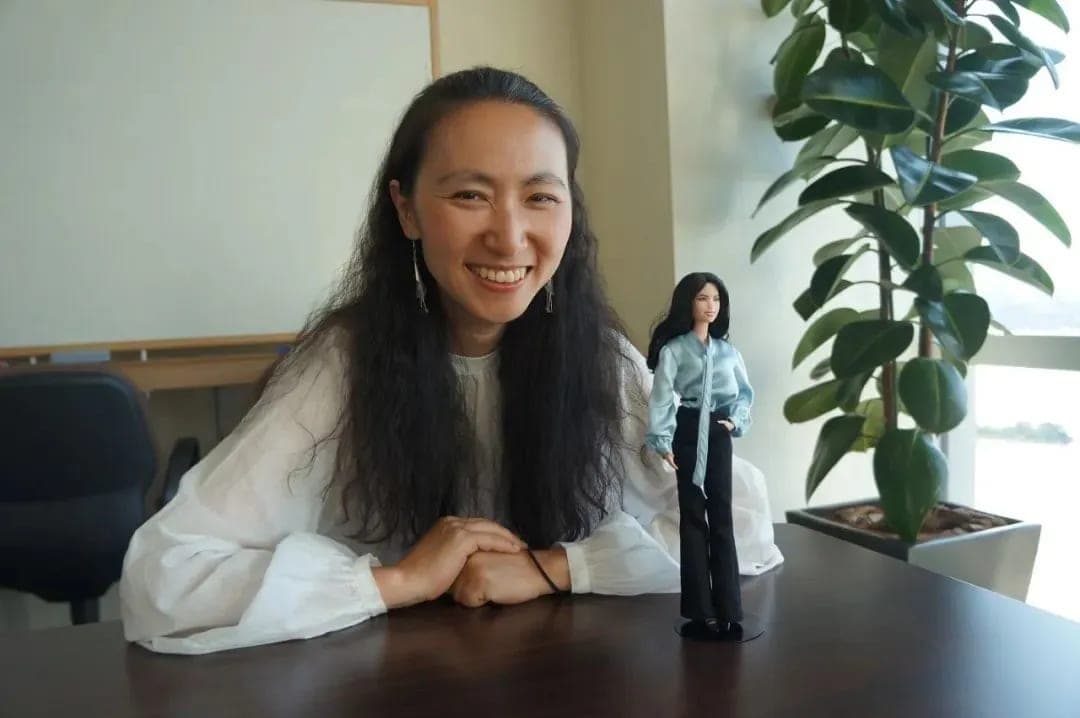
I was named a "Barbie Role Model" during International Women's Day 2023 and received a Barbie doll modeled after me. The seven women from around the world who received this honor are all studying or working in STEM fields. This recognition is not only a personal affirmation but also an encouragement for all girls to bravely pursue their scientific dreams. One of the Barbie Role Models, Anne Wojcicki, said, "By sharing our stories, I hope to inspire girls to try new things, face their fears bravely, and see challenges as exciting opportunities." Japan has also launched the "STEM Girls Ambassador" program, inviting women working in science, technology, engineering, and mathematics to serve as role models for young women.
Japanese men are not having it easy either. They have the longest paid working hours among OECD countries, averaging 452 minutes per day. In comparison, Sweden has 313 minutes, the United States 332 minutes, and South Korea 419 minutes. You might think this is only natural—men work longer paid hours, while women work longer unpaid hours. However, in reality, when gender inequality exists, both sexes become victims of societal stereotypes—the more imbalanced the input and output for men in the workplace, the more household responsibilities women bear alone.
However, this is not the result of "personal choice." Structural issues arise from a combination of historical employment practices and entrenched gender stereotypes.
If a woman decides to cut back on household chores to pursue a full-time career, the negative impact on social welfare might make her feel the trade-off isn’t worth it. If a man chooses to reduce his work hours to take on more household responsibilities, the barriers in workplace culture could quickly steer him back. Behind this phenomenon lies a truth: when individuals lack the freedom to choose, fairness inevitably suffers.
It begins with family and ends with family.
In February 2024, I invited Professor Ueno to deliver a lecture at the University of Tokyo specifically for the Chinese community, where she provided an in-depth analysis of the complex historical, social, and economic factors behind the low social status of women in Japan.
Japan has long maintained the tradition of "men working outside the home and women managing domestic affairs." Since the Edo period (roughly equivalent to China's Qing Dynasty), the values and family structures of the samurai class have dominated society. Men were primarily responsible for handling political and military affairs outside the home, while women took charge of domestic matters, such as financial management, child-rearing, and maintaining family rituals. Furthermore, Japanese culture, deeply influenced by Confucianism, reinforced the notions of male superiority and hierarchical order within the family, further solidifying traditional gender roles.
After World War II, Japan experienced rapid economic growth and technological advancement, yet it continued to uphold the so-called "Showa family" structure (the Showa era spanned from 1926 to 1989), where only men worked outside the home to support the family. At the same time, men faced a workplace culture with no limits on working hours. During the "Japan NO.1" era from the 1970s to the 1990s, 90% of workers in the secondary and tertiary industries worked over 49 hours per week, with 17% exceeding 60 hours. This high-intensity workplace culture meant that men rarely participated in family life, leaving most domestic responsibilities to women.
The starting and ending points of gender disparity in Japan are both rooted in the family, and beyond the family lies basic education.
When I visited a public school in Japan, the teachers proudly told me about a school tradition: the cloth bags for shoes and lunch boxes, as well as the cotton covers on the backs of chairs, are all hand-sewn by the mothers. As a result, each one is unique. Naturally, this small space becomes a silent arena for mothers to showcase their skills—the quality of their handiwork is immediately visible in the classroom.
A Chinese mother in Japan, who is also a university teacher, doesn't know how to sew, so she tried to find online merchants similar to those on Taobao to do it for her. However, she discovered that such merchants are rare and expensive. Eventually, she found a tailor shop willing to take on the task, but she was met with judgmental looks, implying that she was an inadequate mother. Beyond items, preparing elaborate bento boxes for school is also primarily considered the mother's responsibility. These unspoken expectations conceal powerful social conditioning. As a result, even preschool children clearly understand that these tasks are part of a mother's social role, while leadership positions are naturally not seen as fitting for mothers.
In Japanese elementary and middle schools, female teachers make up the majority, yet women are severely underrepresented in leadership roles within the primary and secondary education system. According to data from the Ministry of Education, Culture, Sports, Science and Technology, the proportion of female principals in public schools is approximately 25% in elementary schools and around 28% in special needs schools, while in middle and high schools, it is less than 10%. Compared to other countries globally, such as Italy and the United States, where the proportion of female middle school principals is close to 70% and 50%, respectively, Japan’s figure stands at just 7%. In other words, as children grow up, the "leaders" they encounter are predominantly male.
The Japan Association of Female Principals conducted a survey asking first-grade children why there are more female teachers but fewer female principals. Some of them responded, "Women are not suited to be leaders." Therefore, whether it's boys or girls, stereotypical gender education is deeply ingrained from the moment children start school.
Not only men, but women also unconsciously impose male perspectives on themselves and other women. In my previous "Observations on Japan," I mentioned that one reason for the lack of innovation in Japanese society is the excessive "involution" among young people. However, the driving force behind this phenomenon is none other than their mothers.
Since women return to the family early and are unable to gain sufficient recognition in society, they often view their children’s academic achievements as their own accomplishments. As a result, they invest a significant amount of time, energy, and financial resources into their children’s education. Elite extracurricular tutoring classes have become a place for mothers to realize their self-worth, and a prevailing view in society suggests that a child’s ability to gain admission to top-tier schools depends on "the mother’s fervor and the father’s financial strength."
In my view, this is a highly distorted social condition. Women, unable to achieve normal career development, shift their focus to their children's education. This not only fails to bring positive impacts to Japanese society but also hinders innovation and progress. How tragic this is!
Both genders need to shift their perspectives.
In recent years, the Japanese government has implemented a series of policies, leading to some improvement in women's social status. For instance, the proportion of women in management positions has increased. Among Tokyo Stock Exchange-listed companies, the share of firms with no female executives dropped from 84% in 2013 to 18% in 2022, meaning nearly one in five companies still have no women in top management. Unfortunately, change cannot happen overnight. Even among executives, women continue to earn less than their male counterparts.
In fact, there is no real opposition between men and women on the issue of equality. Unfairness toward women does not bring fairness to men, nor does suppressing men achieve fairness for women. The essence of unfairness toward women lies in social injustice, and both men and women are victims. The earlier mention of men’s excessively long working hours is a typical example of this.
Let me give another more extreme example. The tradition of foot-binding among Chinese women began in the late Northern Song Dynasty, flourished during the Southern Song, and persisted for nearly a millennium until the late Qing and early Republican era. Everyone acknowledges it as an oppressive custom rooted in patriarchal traditions, but what is truly chilling is that it was not men who enforced it, but women. Generation after generation of mothers demanded that their daughters comply with this system, passing it down through the ages, which allowed the practice to endure. This vividly illustrates how women often adopt a male perspective in viewing and imposing expectations on other women. However, the eradication of foot-binding in China was not solely due to the awakening and resistance of Chinese women but also relied on men with progressive ideas. Enlightened men recognized that such physical mutilation of women was uncivilized, hindered social progress, and obstructed the grand cause of revolution for men. Thus, they rose up in resistance, playing the role of heroes fighting for women’s rights.
Therefore, from the perspective of society as a whole, when women are not treated fairly, men do not actually benefit; they can only go along with the situation. Only in a more inclusive and open society can both men and women become beneficiaries of fairness. If the creativity and vitality of women, who make up half of Japan's population, cannot be fully realized, it would undoubtedly be a tremendous waste for Japanese society. Moreover, it could lead to some distorted consequences, ultimately resulting not only in a waste of talent and life but also in the creation of more social problems.
Inspiration and Drive from Women
Chizuko Ueno was selected as one of Time magazine's 100 most influential people in the world in 2024, largely because she has identified the structural challenges women face in Japanese society and the underlying causes behind them, while also inspiring women at the individual level to awaken and find the courage to make different choices. This is why the work of such scholars is so significant.
In 2023, Forbes reported that three Japanese women were named to the list of the world's 100 most influential women: Tokyo Governor Yuriko Koike, Seiko Shimizu, the first female executive director of the Bank of Japan, and Makiko Ono, the first female CEO of Suntory. Not only do they wield significant influence domestically, but they have also driven important economic and policy changes on a global scale.
In the fields of technology, culture, and art, Japanese women have also made remarkable achievements. For instance, Chiaki Mukai, Japan's first female astronaut, completed a space mission lasting 14 days, 17 hours, and 55 minutes in 1994, setting a new record for the longest time a female astronaut had spent in space. In the art world, Yayoi Kusama has gained global recognition for her iconic polka-dot works, while Tetsuko Kuroyanagi captured the innocence of childhood with her heartfelt writing in "Totto-chan: The Little Girl at the Window."
In April 2024, I had the opportunity to visit Kobe College, a women’s university founded in 1875. Established by two female missionaries, it has nurtured generations of English and advanced translation professionals in Japan. Accompanying me on the visit were two women who had studied there 50 years ago. Fluent in English and intellectually vibrant, they are now employed at NHK, handling high-intensity, high-quality work.
These outstanding Japanese women have not only achieved remarkable success in their respective fields but have also provided inspiration and momentum for the gender equality movement in Japan and globally. Just as innovation was highlighted in the previous article, having excellent female role models, intellectual resources, and the power of action can undoubtedly drive Japan toward greater gender equality.
“Parenting with a Smile”
My new book, "Parenting with a Smile," has recently been published and is now available for purchase. Let’s embrace "joyful parenting" together with every parent. For overseas customers interested in buying, please contact customer service at info@yinuoli.org.
“Workshop Preview for July 2024”
Together, we will explore the blockages of inner vitality, grounded in the scientific foundations of physical and mental health. We will invite the "challenges" in life to help ignite a flourishing vitality. You will learn to observe the internal systems that govern our experiences, identify and remove inner obstacles, re-examine our external and internal worlds, connect with your inner energy, and feel the power of physical and mental relaxation.
Seats for the offline workshop are limited to 50 participants, available on a first-come, first-served basis.
I hope this summer, we can gather together to embark on a pilgrimage journey that connects with our inner energy and rekindles the vitality of life.
For more details and registration, please refer to the poster below. Overseas users can contact customer service via email at info@yinuoli.org.
From July 18th to July 23rd, the ETU Study Camp (Japan • Kannabe Highlands Station) is also open for children's independent participation. For more details, please scan the QR code to consult with our customer service.
Cost includes accommodation and meals, early bird discount available now▼