Yinuo: The essence of workplace dilemmas has never truly been a "workplace" problem.
To be honest, when I first launched the 6-week workplace workshop in May this year, things didn’t start off smoothly.

To be honest, when I first started the 6-week workplace workshop in May this year, things didn’t go smoothly at the beginning.
Although I knew things might not go smoothly before the course started and even sent a discouragement letter, it didn’t manage to dissuade many.
After the course started, many people felt completely lost during the first two sessions.
Thank you for not giving up when everyone was confused. Later, we gradually came to our senses, understood why the course was designed this way, and felt that we benefited from it.
Many participants in the workshop have ten or more years of work experience, have attended business school, and have participated in various workplace training sessions and workshops in China or the United States. Many have also worked with career coaches, counselors, or even psychologists.
I have certainly experienced it myself, and over the years, I have also shared insights at various companies and forums, so I understand what this "market" is doing.
But it is precisely for this reason that my workshop design is different from all of these.
Why? Because, when I honestly reflect on my twenty years of professional experience, I realize that what truly brought me breakthroughs and growth was never workplace skills or tactical techniques, but rather a kind of underlying self-awareness and inner shifts. These shifts often seemed to happen quietly, almost imperceptibly, and appeared unrelated to the workplace, yet their impact has been profoundly far-reaching.
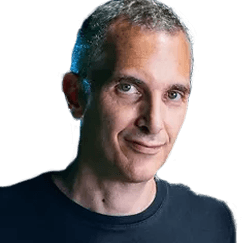
In "Where Does Strength Come From," I shared the story of my connection with Patrick, an executive coach I've been working with since 2013.
One of the short stories is about tipping at a restaurant.
Patrick immigrated to the United States from Argentina. In Argentina, tipping at restaurants is also customary, usually around 10%, while in the U.S., it's about 15%. After moving to the U.S., Patrick always tipped 20% whenever he dined out. His wife once asked him, "Why do you tip so much?" He would always reply, "Because the service at the restaurant is good." Until one time, the service was particularly poor. When they were leaving, he still left a 20% tip. His wife asked him again, "The service wasn't good this time, so why did you still tip 20%?"
Only then did he begin to ask himself, yes, why? Why seek a certain kind of respect and recognition from a complete stranger, someone he would never see again, through tipping? He answered honestly, knowing it was because he was an immigrant, and he particularly didn’t want "Americans" to know he came from a "poorer" country, so he tried to prove his worth through tipping. Digging deeper, why did his value need to be proven through tipping? Because he believed his value was reflected through money, or at least strongly correlated with it. Pushing further, if not money, then what? At this point, he realized the underlying issue was about how he judged his own worth. Things like money, education, and experience seemed tangible and measurable—without them, he didn’t know how to describe his own "value."
Seeing this, I wonder if you feel the same way.
In the workplace, our desire for recognition through academic qualifications and seniority, the extra effort we put in out of fear of being judged, the detours we take because we feel powerless to face conflicts, and the opportunities we miss due to various fears—all of these, at their core, stem from our judgment of our own worth.
These value judgments are largely formed unconsciously, shaped by our family and educational experiences. However, only when we can recognize these "shaping" forces and break through them can genuine, inside-out change truly occur.
Patrick has given me a lot of inspiration over the years. One of those things was introducing me to the English version of the book *The Surrender Experiment* in 2016. After reading it, I wrote a reflection, which miraculously contributed to the release of the Chinese edition of the book. Earlier this year, I had the privilege of meeting the author, Michael Singer, in Florida and had a very interesting conversation with him. You can watch this special interview in the Nuoyan community and on my YouTube channel. The following two photos are of me chatting with Michael Singer during a walk and of me in front of the small cabin from the story of *The Surrender Experiment*.


The final 6-week workplace workshop, starting at the end of October this year, will feature Patrick as a guest speaker. Over the years, he has been deeply involved in the fields of corporate development and leadership growth, and everyone will have a rare opportunity to hear his insights.
When I say "The root of workplace dilemmas lies outside the workplace," it actually has two dimensions. One is inward, recognizing the personal struggles behind our workplace challenges. The other is outward, understanding the true nature of the world we live in.
Why? Because the workplace does not exist in a vacuum; workplace culture is an extension of societal culture.
Overseas, if you don't understand the historical and cultural context of a society, your understanding and participation in the workplace will always remain at the level of a "tool." Beyond work-related matters, you won't be able to engage in truly deep communication and exchange with colleagues. Without such interactions, it's impossible to truly integrate into the organizational culture of a company, let alone navigate it with ease and achieve growth and promotion.
Liu Yu's book "30 Lectures on Comparative Politics" may appear to be an academic work, but it is actually closely connected to the living conditions of "ordinary people."

In the preface, she writes:
...We are compelled to attempt to understand politics, not only because—as Aristotle said—man is by nature a political animal, but also because the source of our destiny lies within politics.
......
Sailors navigate the vast ocean, diligently honing their seafaring skills, mastering knowledge of weather and geography, and stocking up on food and supplies. Yet, they often fail to realize that what most determines the success, failure, and safety of their voyage is not the sailor's wisdom, but the "temperament" of the sea itself.
......
The unseen ocean beneath all our feet is the invisible storm we must navigate.
How brilliantly put!
Isn't the same true in the "workplace"? The workplace is nothing more than a subset of social life. If we focus solely on the various techniques in front of us every day, without understanding why the waves surge or where they are heading, when the "storm" arrives, we might capsize without even knowing why.
So this time, the other guest at my workshop is Professor Liu Yu. This is an even rarer opportunity than meeting Patrick. She will discuss "The Decline of Democracy" with us, as it relates to how we understand this "vast sea beneath our feet."
Liu Yu says in her book that her work——
"It does not attempt to make judgments about the right or wrong of the 'politics' of a specific time and place. Instead, it seeks to detach from the 'here and now,' using historical and global perspectives to inspire new questions and reflections. Often, differences in viewpoints stem from differences in perspective—the green fields seen from an altitude of 100 meters may appear as nothing more than a small oasis in a desert when viewed from 1,000 meters, and from 5,000 meters, that desert might simply be an isolated island in a vast ocean. 'Comparison' is meant to detach, and detachment is meant to reflect from another height."
In fact, everything in the world follows the same principle: one must detach and observe from a higher perspective to possibly see the truth.
The other two guests of the workshop are Deborah Davis, a sociology professor who has taught at Yale University for forty years, whom I introduced in my public account article "Why Her?" The other is Sally Piao, Vice President of Oracle and Intel, whom I introduced in Newsletter Issue 4 and the subsequent live stream, allowing everyone to get to know this interesting friend, Sally.
Returning to the "two sides" mentioned earlier.
Over the years, reflecting on my professional journey and the many cases I have witnessed and supported, I have come to realize that these two seemingly opposite directions—one inward and one outward—are in fact deeply interconnected. In the end, life is nothing more than understanding the world and understanding oneself. These two threads are mutually revealing: our perception of ourselves influences how we perceive the people and the world around us, while our understanding of the truth of the world, in turn, shapes our self-awareness. Our life experiences, including our "career journeys," are merely a manifestation of the interplay between these two threads.
Therefore, this workshop is designed around these "two aspects." Over the course of six weeks, there are two intersecting main themes: one is the "external theme," which focuses on understanding the cultural context behind American history and workplace culture, and the other is the "internal theme," which explores how to recognize and break through our internal limitations to reconstruct our self-perception.
The intersection of these two main lines is each of our own "hero's journey."
The workshop will also cover methods and techniques, but they will be taught based on the foundation of both inward and outward "expansion."
Because only when our internal and external spaces are expanded can we truly make good use of "techniques" and skills. When our internal and external spaces are expanded, our inner wisdom is activated. And the inner wisdom of each person holds limitless potential.
You might wonder, with such a design, can I understand it? Can it answer the questions that have troubled me for a long time? Can it truly help me grow? Is it really useful for my career development?
To answer these questions, I think it's best to hear from participants who have attended the workshop. So, in yesterday's live stream, I invited four friends who have taken part in the workshop, all based in the United States. One works in the tech industry, one in finance, one in healthcare, and one in academia. I hope you can find your own answers in their sharing. This conversation has also been uploaded to my YouTube channel, and everyone is welcome to subscribe and watch.
Additionally, this workshop will be the last one I conduct in the near future. The early bird pricing for this workshop will end in one week. Following this, I will host another live stream, where special discounts will be available for orders placed during the session. I look forward to seeing everyone in the live stream and at the workshop.