Setting off in the golden autumn, missing it means saying goodbye.
Friends often ask me, "I already have a job in China, but I still want to find an opportunity to study for a degree abroad. Is this idea feasible?"
“~There's a surprise at the end of the article, so don't miss it, friends following the Yinuo Workshop~”
Friends often ask me, "I already have a job in China, but I still want to find an opportunity to study for a degree abroad. Is this idea feasible?"
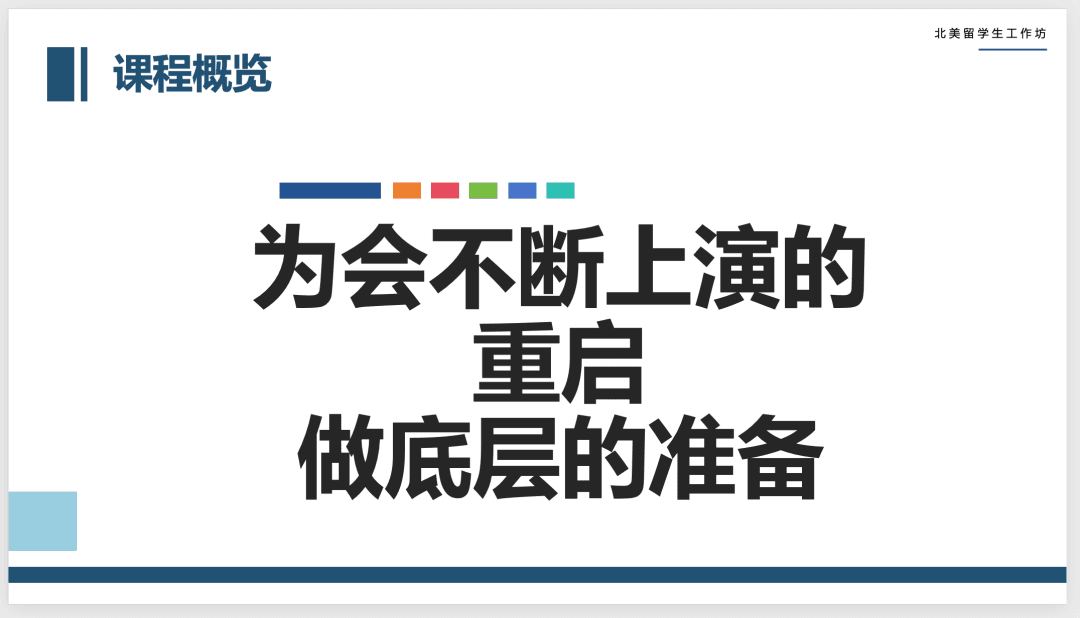
To lay the groundwork for the ongoing cycle of reboots.
Ultimately, this issue boils down to a matter of restarting.
The North American International Student Workshop has been running for two weeks now.
Studying abroad is a fresh start, graduating from abroad is a fresh start, starting a job is a fresh start, and even reaching middle age can still be a fresh start.
I often tell everyone that we need to have the ability to identify problems from within our own issues.
Just like this issue, what we ultimately need to face may not necessarily be a specific question of what degree to pursue abroad, but rather how to lay the foundational groundwork for a fresh start.
Moreover, due to the backdrop of the times, this kind of restart will continue to unfold. Recognizing this early and proactively preparing at the foundational level will enable us to face it better, with greater composure and initiative.
I often talk about the three levels of having, doing, and being. We tend to focus too much on the "having" level—for example, I want to get this, I want to get that; or we focus on the "doing" level—I want to do this, I want to do that. However, what truly determines our ultimate state of life is actually our underlying state of "being."
To find the questions within the question, we must also delve deeper from the most superficial level. Because any answer at the surface level is not a good answer. Just like returning to the question of whether one should seek opportunities to study abroad for an MBA or a certain degree, in response to this surface-level question, I can only give you two answers: you should pursue it, or you should not. Both answers may be useless to you.
And when we dig deeper, the next layer of the problem is that I feel like something is missing, but I don’t know what it is. So let’s explore what’s missing.
In fact, only such a path can lead us to the answer we seek, rather than superficially debating whether to choose option A or option B.
Ultimately, all questions must be answered by ourselves. And there is a method to finding those answers.
Ultimately, it comes down to understanding oneself and understanding the world. If one’s perception of the world is clear, and one’s understanding of oneself is clear, then these issues may no longer be problems. Understanding the world, comprehending oneself, and constructing one’s identity—these are the most important resources and support that the workshop hopes to provide to everyone.
If there's one thing I hope everyone can take away after the workshop, it's the ability to understand the world and understand yourself, because that is the most fundamental skill.
Who participated in the workshop?
The first international student workshop has officially begun. I am delighted to have over 130 participants joining me in preparing for a "reboot" through this workshop.

In this workshop, approximately 19% of the registrants are international students, 20% are prospective students preparing to study abroad, and around 10% are graduates. The registration profile of these participants aligns closely with the target audience we initially aimed to serve.
However, based on the collected questionnaire statistics, a larger proportion than that of international students is made up of their families. This indicates that more parents are getting involved in the learning process, either because their children are relatively young or because the parents of international students wish to enhance their own understanding.
To my surprise, the largest proportion, approximately 29%, is "other." Considering the age distribution, the increase in middle-aged individuals among these "other" study-abroad candidates indicates that people of different ages are considering making changes.
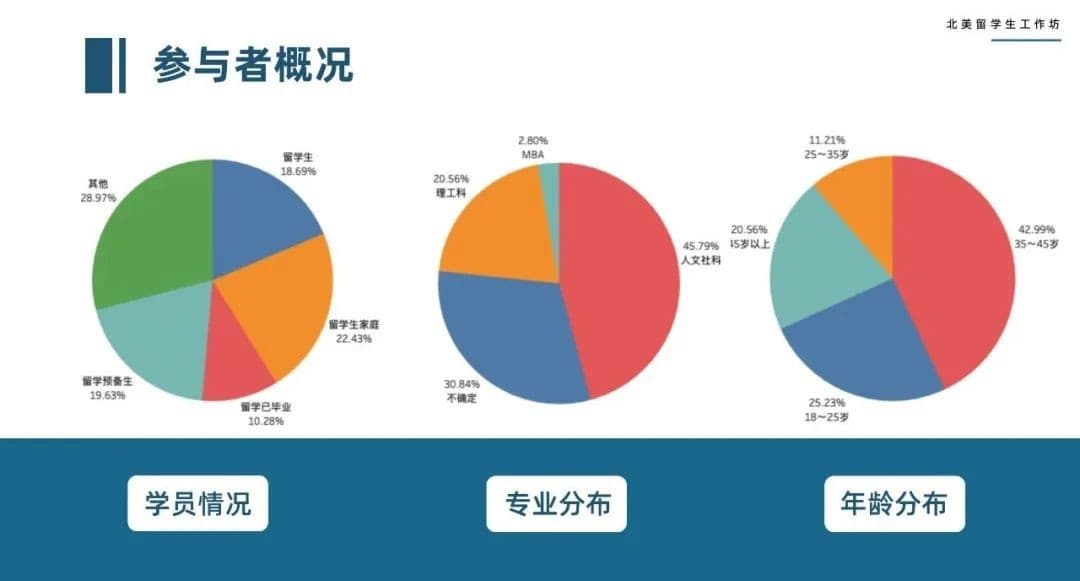
From the perspective of major distribution, approximately 45% of the students are enrolled in humanities and social sciences, over 20% are in science and engineering, and there are some who remain undecided, which is quite normal. I believe the higher proportion in humanities and social sciences may be because choosing these fields requires deeper reflection and involves more challenges in "taking root."
The workshop has no age restrictions, and as always, the age range of the participants is quite broad. This time, there was a relatively large proportion of families with students studying abroad, as well as many middle-aged friends around my age. I believe they came not just for the narrow focus of studying abroad, but to gain more potential connections. For the relatively younger friends, this should be a valuable opportunity to walk alongside many experienced peers. Many things in life may seem like they can be accelerated, but in the end, time is fair—some things simply require time to understand and experience.
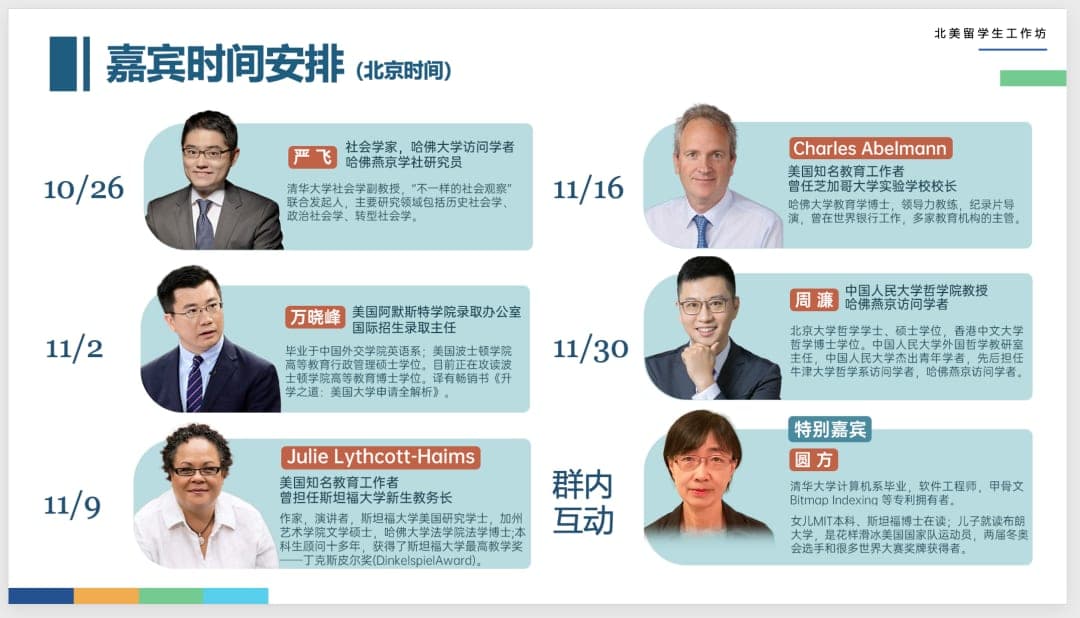
The course has already begun, and Professor Yan Fei's sharing session just concluded this week. He brought us the perspective of an excellent sociologist—heavy, yet filled with hope.
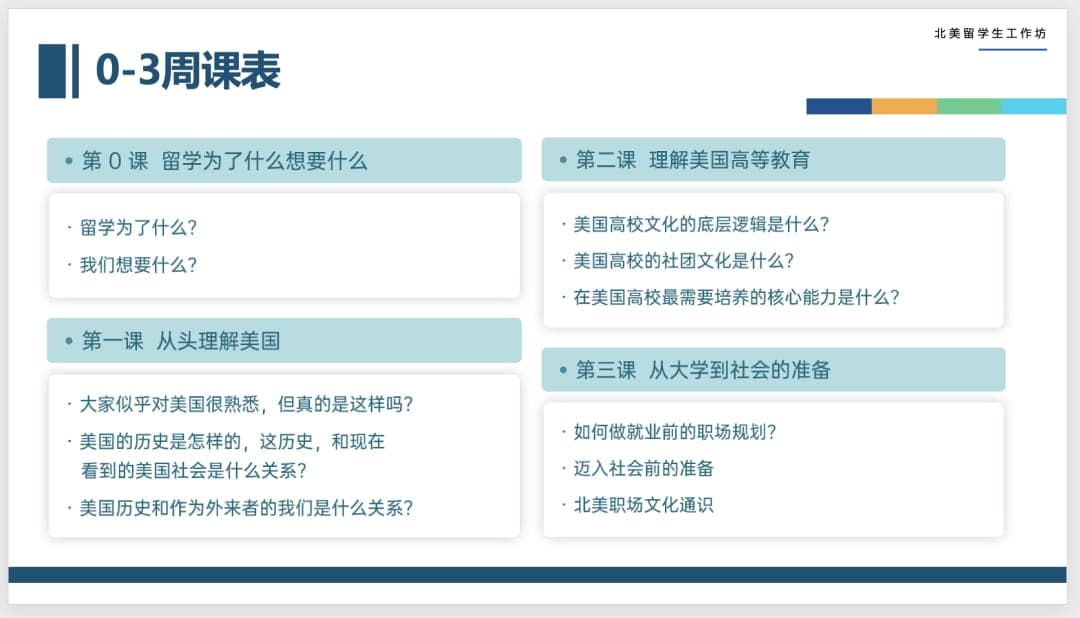
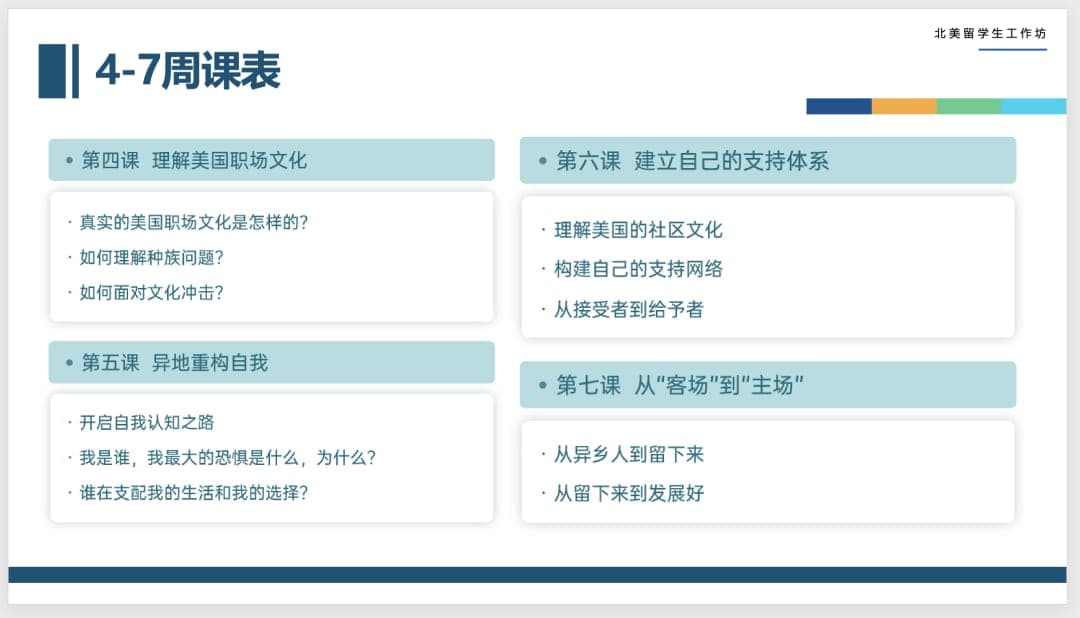
In the 8-week study abroad workshop, whether your original intention is to study abroad, prepare for it, or even immigrate in midlife, it is a process of self-construction. At its core, what each of us may need most is not necessarily someone lecturing to you (though there is rich course content), nor someone giving you a lot of so-called "guidance." Instead, it is more about having the opportunity to see yourself within a certain space. You are the protagonist in this space, while other classmates, teaching assistants, homeroom teachers, guest speakers, and myself in the workshop all collectively build such a space, serving as mirrors for one another. We support everyone in embarking on self-driven exploration, helping each person gain what they need most here, and organizing and constructing a new self in this process.
In fact, the difficulties we encounter in study, work, or life may seem vastly different on the surface, but their underlying essence is similar. Therefore, if we can open up, we can all see ourselves reflected in the experiences and reflections of others.
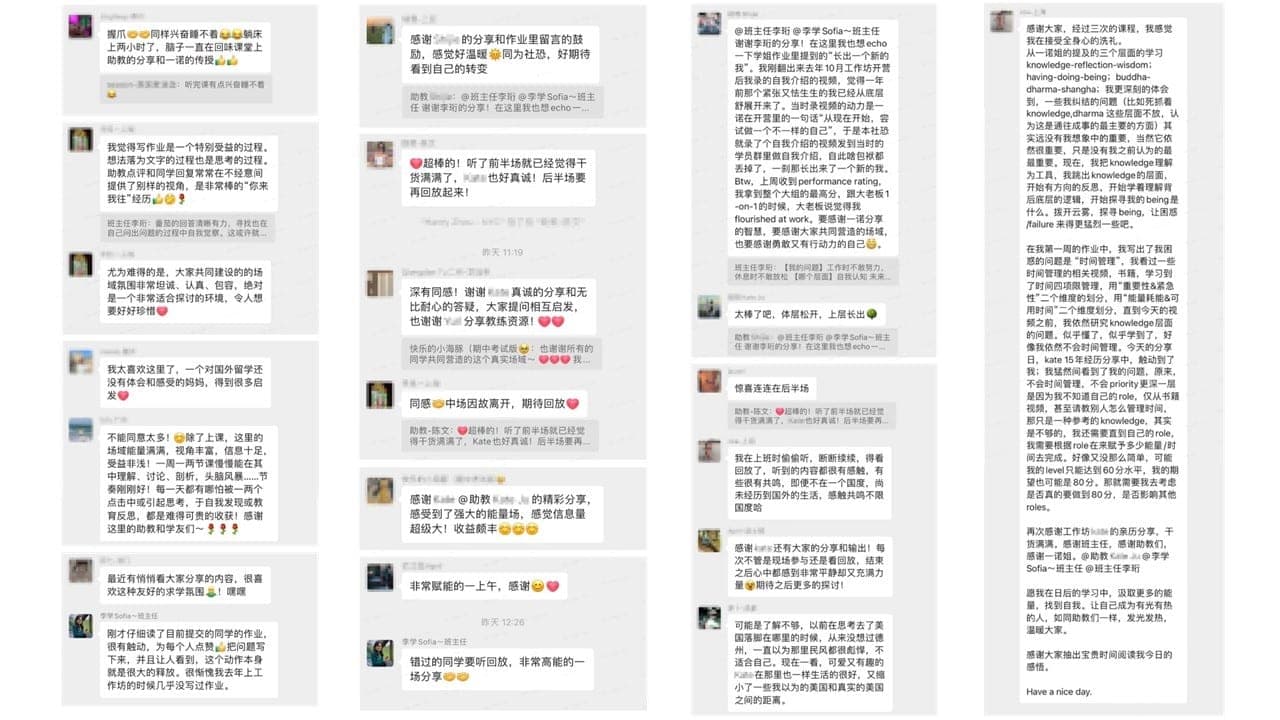
Soon after the camp began, many participants noticed the uniqueness of this workshop. Let's take a look at their feedback.
If you miss it this time, I hope we'll have another chance in the future.
Due to the number of registrations quickly reaching the planned limit, we have closed the registration channel ahead of schedule. We sincerely apologize that many applications received in the final days could not be accepted this time. I will continue to hold workshops, and although the schedule has not been confirmed yet, students who wish to participate in the next session can pre-register by scanning the QR code on the poster below and pay a deposit to secure a spot for the next workshop. The deposit is expandable—$100 can be deducted from $200 of the tuition fee. If you are unable to attend the next session, the deposit is refundable.
Overseas users who wish to learn about the expansion fund, please contact info@yinuoli.org.