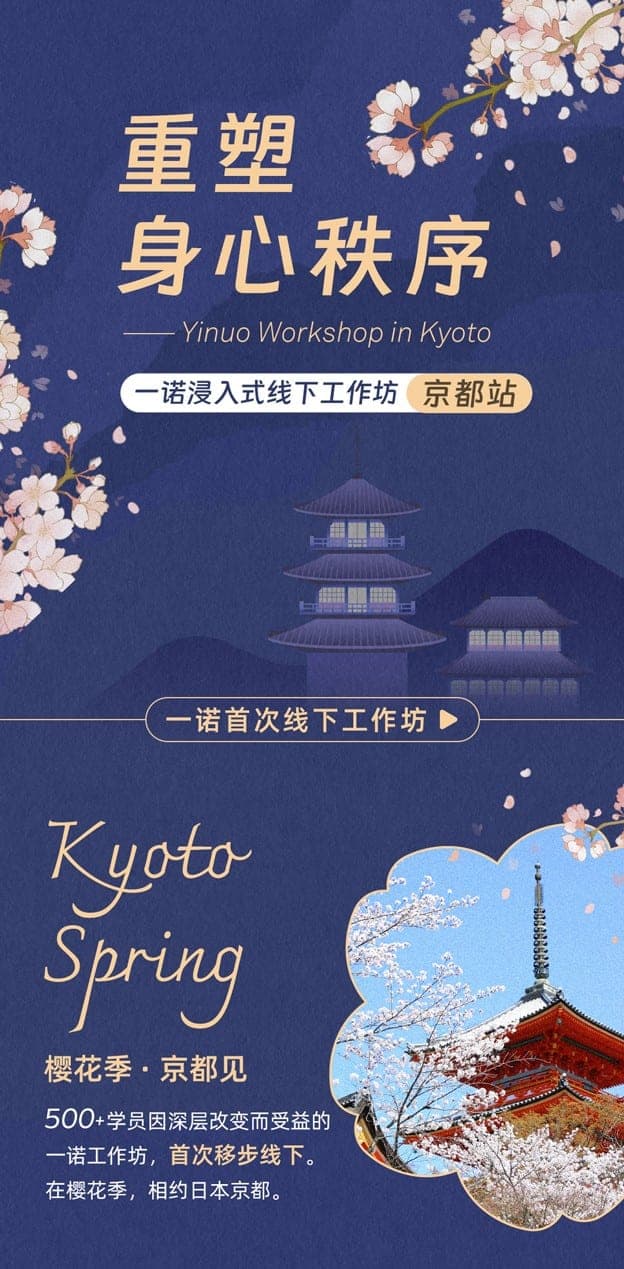
See you in Kyoto during cherry blossom season.
Since the end of March this year, I have been invited by the Japan Foundation to stay in Japan for a few months.
Since the end of March this year, I have been invited by the Japan Foundation to stay in Japan for a few months.
This is a journey that fills me with anticipation. Being able to visit Japan during the cherry blossom season makes it feel even more special.
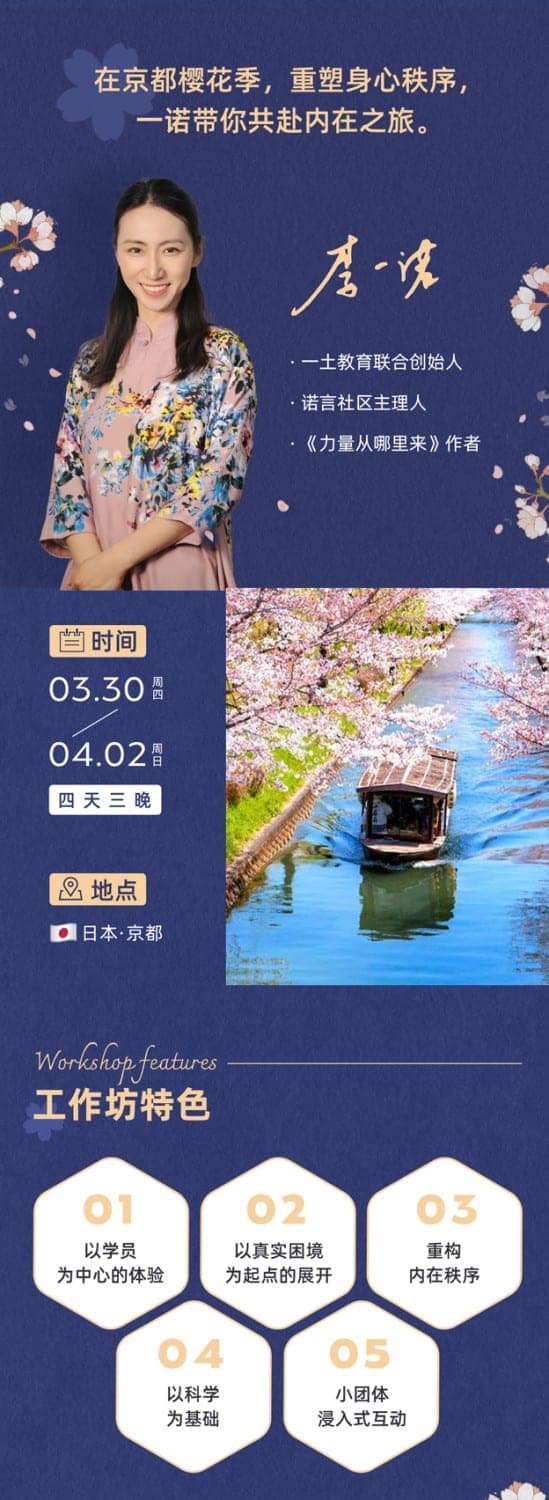
Since there is such an opportunity, I plan to hold my first offline workshop in three years in Kyoto, around late March to early April, when the cherry blossoms are at their peak. Registration details can be found at the end of the article. Spots for the offline venue are limited, and I hope to meet like-minded friends in Kyoto.
My last extended stay in Japan was back in 2006. If you've read my book, you might remember the "German leader." That scene took place in the McKinsey Tokyo office. I joined McKinsey in 2005, and in 2006, I was still a first-year rookie. On that project, thanks to the recognition from this German leader, I took my first step in my career development. Because of this, Japan holds a special place in my heart.
That trip to Japan in 2006 gave me many new insights about the country.
The things that left the deepest impression on me at the time were—
First, taking the subway, I learned that Tokyo's above-ground rail transit construction began around 1872, and the first underground railway opened in 1927. This was one of the outcomes of Japan's rapid catch-up and comprehensive learning from the West after the Meiji Restoration in the 1860s. The year 1872 was surprisingly early, which left me quite astonished.
CCTV later produced a documentary titled "The Young Students" (which is well worth watching). The year 1872 marked the first group of young students sent by the Qing government to study in the United States. At that time, both China and Japan began learning from the West. Japan started with a complete overhaul of its institutions, laying the foundation for its later modernization. In contrast, the Qing government adhered to the principle of "Chinese learning as the foundation, Western learning for practical use." This was followed by the defeat in the Sino-Japanese War of 1895 and the short-lived Hundred Days' Reform in 1898. Later, Japan quickly plunged into a wave of militarism and fervent nationalism, for which it ultimately faced historical consequences. However, the constitutional and reform efforts initiated during the Meiji Restoration laid a foundation for Japan's integration into the global civilization, which was very different from the situation in late Qing China.
This time, I have been invited to Japan again, giving me the opportunity to observe the country up close. I will also engage in discussions with some Japanese scholars about education in Japan. I am not a researcher, but I consider myself a keen observer. I am very much looking forward to this chance to observe.
The second thing that left a deep impression on me was Kyoto. At the end of 2006, the harmonious scene of modern facilities alongside young men and women dressed in kimonos on the streets of Kyoto was truly refreshing. After exploring Kyoto, I was struck by the discovery that the city was modeled after Chang’an from the Tang Dynasty, essentially replicating such a city. Yet, from that time to the present, the layout of the ancient city and its historical sites have largely been preserved, with damaged areas repeatedly restored. As early as 2006, Kyoto boasted 17 UNESCO World Heritage sites. In contrast, its "template," Xi’an, has only one cultural heritage site—the Terracotta Army. Much of its "long history" no longer exists today.
Regarding Kyoto, I have another "wonderful journey" to share.
Before going to Japan in 2006, I did a bit of preparation. At that time, Japan offered a special discount for foreigners holding short-term visas: for about $400, you could purchase a two-week unlimited-use Shinkansen ticket. Since a one-way ticket between cities cost around $100, the $400 deal was quite a bargain.
At that time, my project in Japan lasted six weeks, from February to April, which happened to coincide with the cherry blossom season. So, on a Saturday morning in late March, I took the Shinkansen and arrived in Kyoto after a three-hour journey. My "plan" was to find a small inn to stay in for the night and return on Sunday evening. However, upon arriving in Kyoto, I realized this idea was completely unrealistic—during the cherry blossom season, hotels of all sizes were fully booked, and I couldn’t find a place to stay no matter how hard I searched. As a result, I had to take the last Shinkansen back to Tokyo that same Saturday night.
The next morning, I woke up feeling like I hadn’t seen enough, so I went back to the station, took the Shinkansen for three hours to Kyoto again, and returned in the evening.
So that spring, I spent two consecutive days, six hours each day on the road, just to squeeze in a "two-day trip" to Kyoto.
But that wasn't the end of it. The following weekend, I followed the same method and went again for two days.
So we managed to squeeze a four-day trip into a 24-hour drive :)
I have another chance to go to Japan this year, entering at the end of March again.
Seventeen years have passed in the blink of an eye.
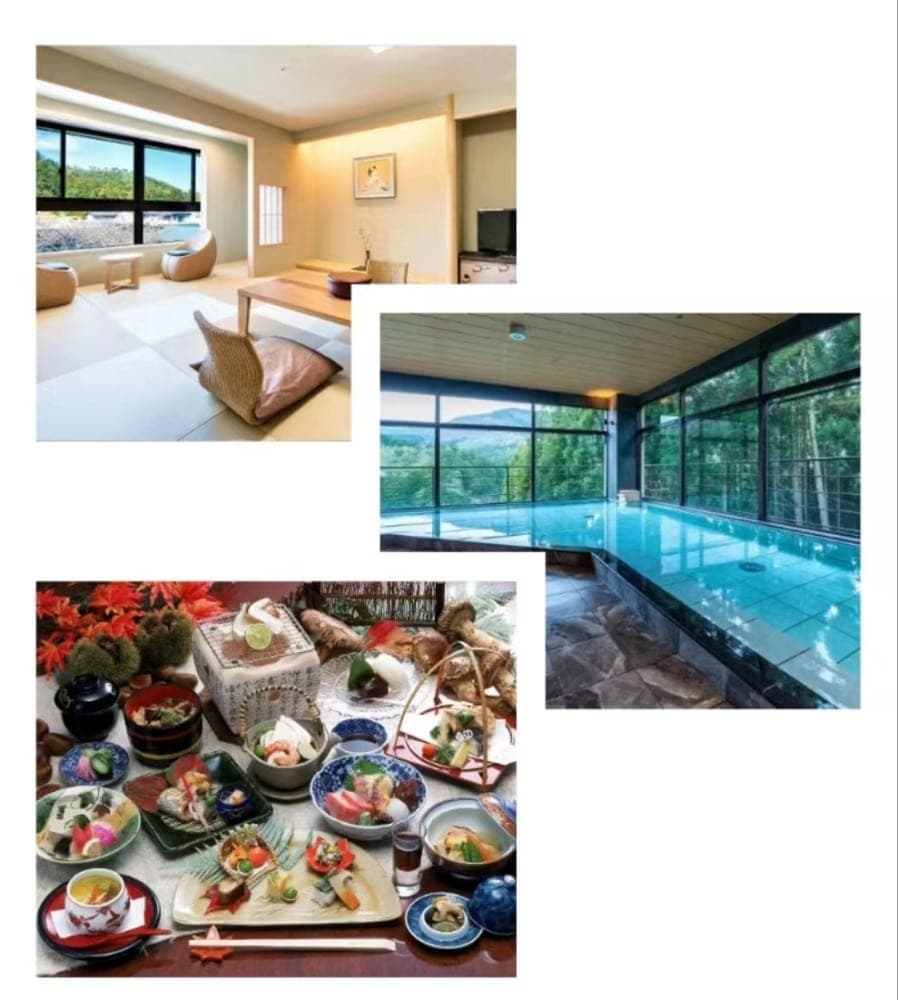
This time, if you can come, you won’t have to worry about hotels like I did back then. We’ve found a place in Kyoto during cherry blossom season with an unbeatable location—surrounded by mountains, temples, and cherry blossoms.
In 2022, I started conducting online workshops on career and inner transformation, which have been attended by a total of 500 people. Many participants have seen significant improvements in their careers and personal well-being.
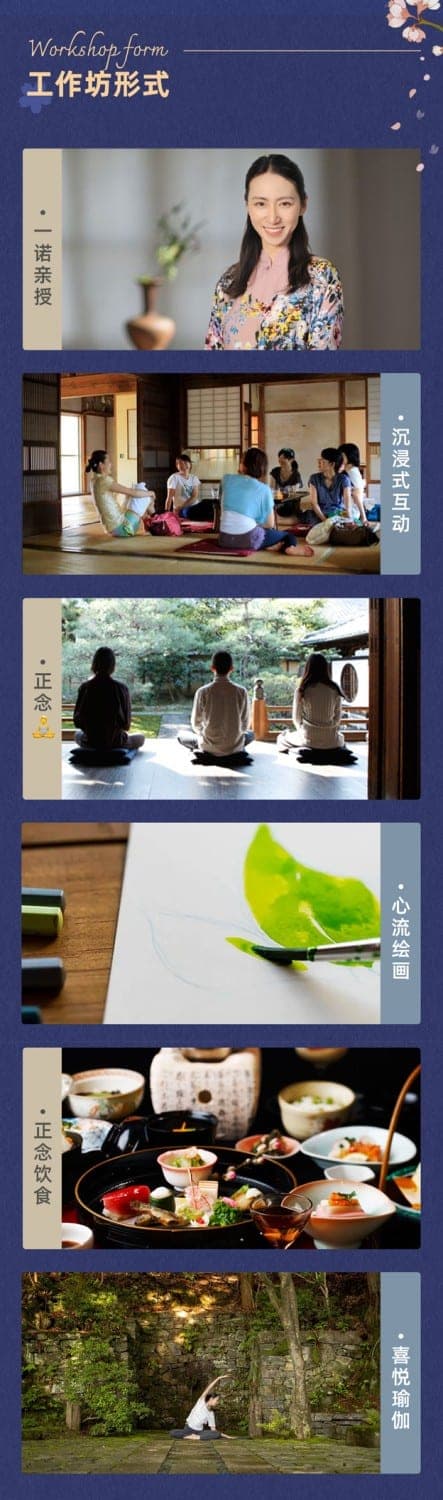
I want to take advantage of this special opportunity to bring our online workshops offline in Kyoto during the cherry blossom season. At that time, I will share with everyone in person the content that has benefited many friends online.
Offline workshops have unparalleled advantages over online ones, because all our senses are more easily opened, and energy is more easily connected.
For me, this is also the first time since the three-year pandemic that I’ve been able to conduct my workshop offline, and I am especially looking forward to it as well.
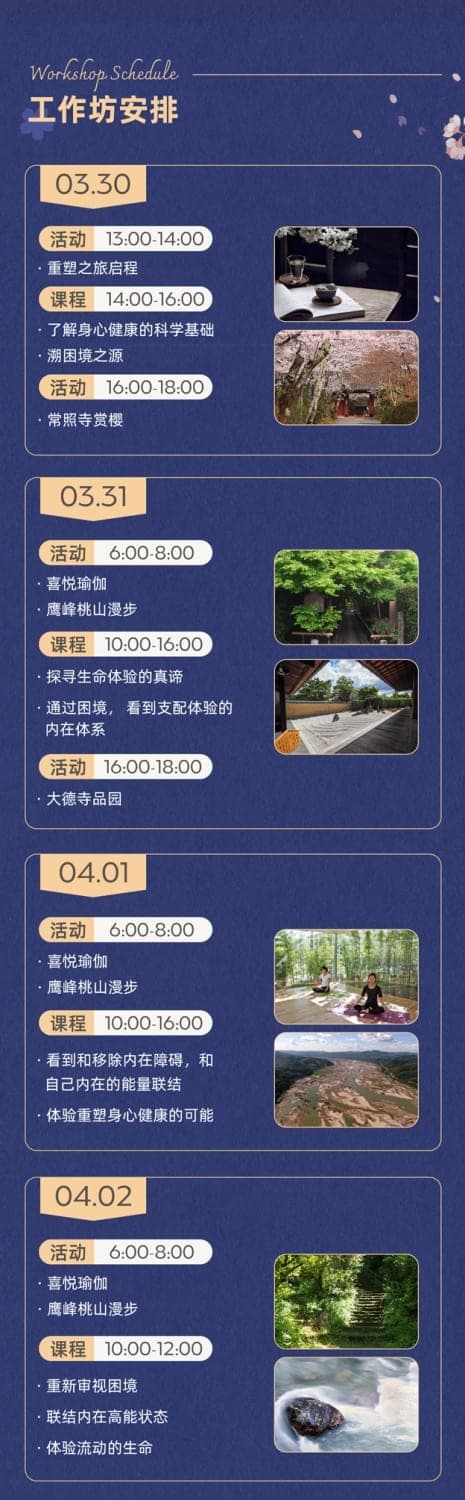
I have specially designed the content for this workshop, hoping to embark on a journey of reshaping the order of body and mind with like-minded friends this spring, during the cherry blossom season in Kyoto.
Workshop details and registration information can be found at the end of the article. Looking forward to seeing you in Kyoto.
Additionally, I've invited my good friend Jingchu to chat with everyone this Saturday. In spring, let's travel light.