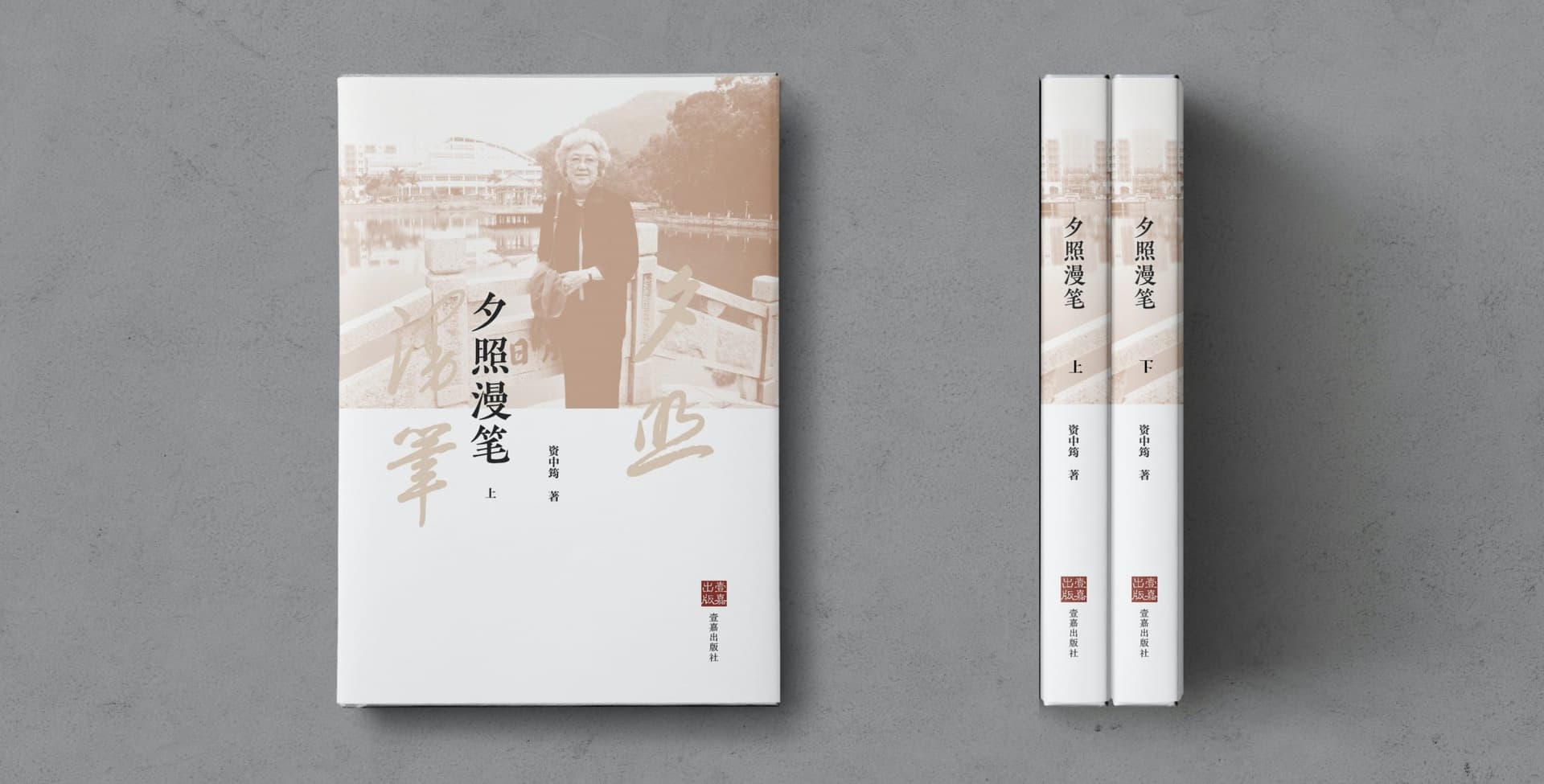
Mr. Zizhongyun's new book "Essays in the Evening Glow" is now available.
Although I studied and worked in the United States for many years, my true understanding of America began with Mr. Zizhong Yun's book *Twentieth-Century America*. That’s why I later included this book as essential reading in my overseas career workshops.
Although I studied and worked in the United States for many years, my true understanding of America began with Mr. Zizhong Yun's book, *Twentieth-Century America*. That's why I later included this book as essential reading in my overseas career workshops.

In recent years, due to well-known reasons, Mr. Zi's articles and books have faced restrictions both online and offline. So, when I learned that One-Plus Publishing had released Mr. Zi's latest self-selected collection in early 2023, I was naturally thrilled. After speaking with the publisher, I learned about the numerous challenges they face in promoting this book, and I hope to do my small part to help. Below, you can find information on purchasing the book overseas. For those who buy it, this will be a rare and precious intellectual gift. I also hope everyone can help spread the word and promote it, so that more friends can receive this gift.
The print version of the book is already available, and the e-book version will be released on March 1, 2023. I will also discuss content related to the book with the publisher at that time. You can follow my LinkedIn or official account to receive further updates.
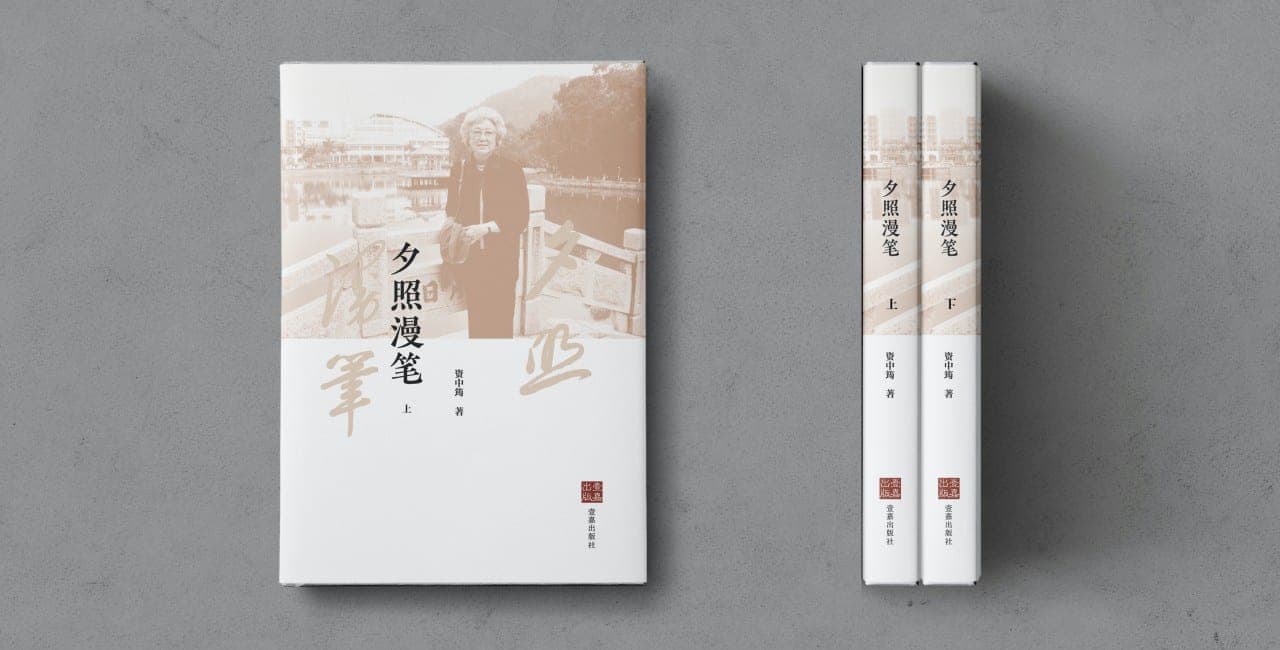
Mr. Zizhongyun's new book "Essays in the Evening Glow" has been published.
The latest self-selected collection by renowned scholar Zi Zhongyun, "Essays in the Twilight," has recently been published by One Plus Publishing, located in the San Francisco Bay Area of California, USA. This is another self-selected collection by Ms. Zi, following "Zi Zhongyun's Self-Selected Collection" in 2011 and "Old Talks" in 2013. It includes her articles from 2013 to 2022 that have not yet been compiled, as well as edited lecture transcripts and interview records. At over ninety years old, Ms. Zi remains sharp-minded and continues to write diligently. "Essays in the Twilight" consists of two volumes, covering eight sections: culture and education, public welfare and social improvement, history and national salvation, world observations, reminiscing about old friends, musical homeland, leisure and miscellaneous thoughts, and interview transcripts. The collection touches on various aspects, including academic reflections, public topics, and private life.
"It is difficult to seek worldly success, but one must act in accordance with one's conscience." Mr. Zi revised Zeng Guofan's famous couplet to reflect his own sentiments. Without flattering the world or conforming to vulgar trends, he advocated for Chinese intellectuals to break free from the "imperial tutor" complex... Spanning five hundred thousand words, his thoughts and concerns remain rooted in "the homeland where one is born, grows up, and eventually passes away."
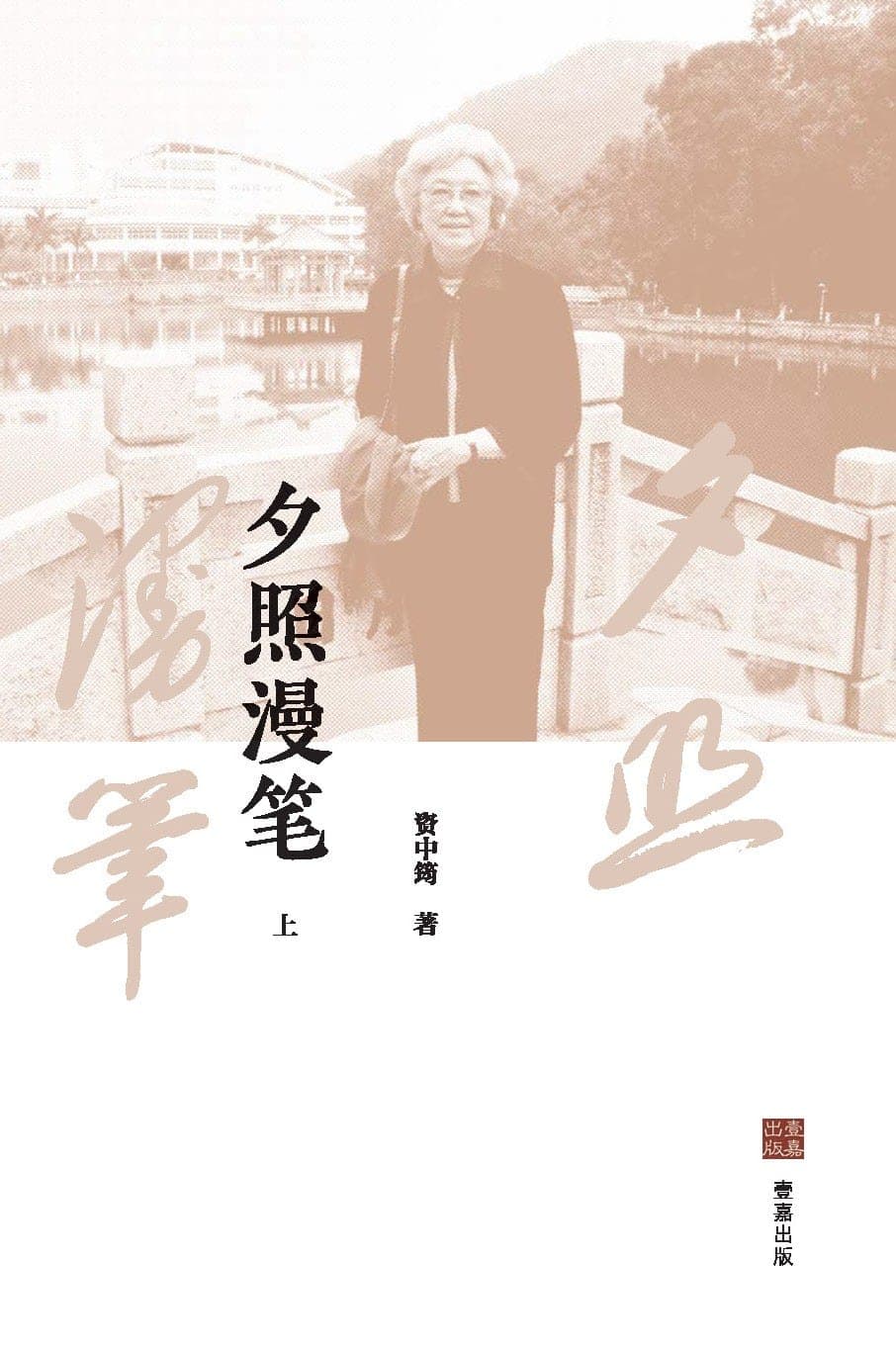
Zizhongyun, an expert in international politics and American studies, is an honorary member of the Faculty of the Chinese Academy of Social Sciences, and a retired researcher and former director of the Institute of American Studies. Originally from Leiyang, Hunan, she was born in Shanghai in 1930. She graduated from Tianjin Yaohua Middle School in 1947 and subsequently studied in the Department of Foreign Languages at Yenching University and Tsinghua University. After graduating in 1951, she worked for many years in the field of foreign relations. In the early 1980s, she participated in the founding of the journal *American Studies* and the Chinese Association for American Studies, serving as the editor-in-chief of the journal and an executive director of the association. She also founded the Society for the History of Sino-American Relations and served as its first and second president. After retiring from the Institute of American Studies of the Chinese Academy of Social Sciences in 1996, she has been particularly prolific in her writings and has been invited to participate in various academic activities. Her expertise lies in international politics and American studies, with additional interests in Chinese and Western history and culture. In recent years, she has focused on issues related to China's modernization, writing numerous essays and miscellaneous articles, and translating various works of English and French literature.
The print and e-book editions of this book are now available at major online bookstores such as Amazon, Barnes & Noble, and Kobo (the e-book edition has been available since March 1st). Friends from various countries can click to access the Amazon purchase links for their respective regions:
Amazon US
Amazon Canada
Amazon UK
Amazon Japan
Amazon Germany
Amazon France
Amazon Spain
Amazon Italy
Amazon Australia
Amazon India
Brazilian Amazon
Amazon Netherlands
If you need to search on your own, using the International Standard Book Number (ISBN) is more accurate and convenient.
"Essays at Sunset" Volume One:
Print edition ISBN: 9781949736564 E-book edition ISBN: 9781949736571
"Evening Glow Essays" Volume II:
Print Edition ISBN: 9781949736588 E-book Edition ISBN: 9781949736595
If your region currently only allows pre-orders (this is not the publisher's plan but an issue with Amazon), please choose the pre-order option. This will encourage Amazon to make the book available as "in stock" as soon as possible. Thank you for your support!
Due to censorship, news about Mr. Zi's new book being published has been completely blocked on WeChat and cannot be shared. Therefore, we also hope to rely on the support of our readers. Please help manually share this book announcement through other channels with all friends who might be interested. Sincerely, thank you!
Digest: Studying History and Saving the Nation
(This article was originally a lecture delivered at the China Europe International Business School Beijing campus in March 2013. Various versions of different lengths have circulated online, with multiple titles. This is the latest revised edition.)
At the beginning of the reform and opening-up period, I attended an exchange meeting between Chinese and American historians in the United States. The American history professor presiding over the meeting said in his opening remarks: When he asked American students why they study history, the vast majority answered that it was out of interest. He had also asked students from Taiwan, and their response was that studying history for interest was too much of a luxury for them—they studied history to save the nation. Later, when he interacted with students from mainland China, their answers to this question were surprisingly identical: they, too, studied history to save the nation! At that time, the two sides of the strait were in a state of opposition, and the content of their respective "saving the nation" might have been opposite. Linking the study of history with saving the nation felt quite novel to him as a Westerner. This was the first time I realized that learning and researching history could be approached from such different perspectives.
There are quite a few nations in the world with long histories, but it seems none place as much emphasis on historical texts as we do, nor do they assign such a heavy mission to historical records. The most common saying is, "Take history as a mirror, and you will understand the rise and fall of dynasties." Here, "fall" is the key—why not "rise and decline"? It is because a dynasty prospers and then declines, ultimately being "replaced" by the next dynasty, which is the most crucial point. A dynasty essentially represents a family in power, which is later overthrown by another family, changing the ruling surname. Drawing lessons from history is to ensure that the current dynasty can endure for generations, avoiding being "replaced" by another dynasty.
Who should learn the most from this lesson? Naturally, it is the emperor and his family. The duty of advisors—the so-called "imperial tutors"—is to teach the emperor how to preserve the throne. The common people have neither the right to participate nor the ability to do so, which is why history was first written for the emperor. Among China's Twenty-Four Histories, only the first, *Records of the Grand Historian*, is an exception—an outlier. Although Sima Qian himself held the position of a historian—the Grand Historian—his purpose in writing history was to "explore the relationship between heaven and humanity, understand the changes of past and present, and establish a unique perspective," not to ensure the continuity of the dynasty. His vision was exceptionally broad, encompassing the entire world within his sight, seeking to uncover patterns rather than ensuring the eternal rule of the Han dynasty. Thus, he was remarkably bold, writing all the way up to his own time. He lived during the reign of Emperor Wu of Han and even wrote the *Annals of Emperor Wu*, without glorifying or praising the emperor. If one reads the *Annals of Emperor Wu* in *Records of the Grand Historian*, it does not leave a favorable impression of Emperor Wu. *Records of the Grand Historian* also resembles the "history of everyday life" advocated by Fernand Braudel, as it includes biographies of people from all walks of life, such as *Biographies of Knights-Errant*, *Biographies of Assassins*, and *Biographies of Money-Makers*. Confucianism has traditionally looked down upon commerce, yet Sima Qian wrote biographies for merchants. He also wrote separate biographies for harsh officials and upright officials, based on his own criteria for judgment. Therefore, Sima Qian's *Records of the Grand Historian* is an outlier among Chinese historical texts. It was written to record historical facts and to express his own sentiments. He intended to hide it deep in the mountains, to be read by future generations, not by the emperor. However, from then on, including the *Book of Han*, the so-called "official histories" of successive dynasties were essentially written for the emperor.
Not included among the Twenty-Four Histories, yet the most authoritative and significant chronological general history is simply titled *Zizhi Tongjian* (Comprehensive Mirror to Aid in Governance). As the name suggests, its purpose is clear: to assist rulers in consolidating their power. Its principal author was Sima Guang, but this Sima is not the same as the other Sima (Sima Qian), and their perspectives are vastly different. Many chapters of *Shiji* (Records of the Grand Historian) feature "The Grand Historian remarks," where the author comments on events and people, expressing personal opinions rather than addressing the emperor. In *Zizhi Tongjian*, "Your subject Guang remarks" often appears, which is also the author's commentary. However, judging by the form of address, it treats the emperor as the intended reader. The final "Your subject Guang remarks" is a letter to the emperor (Emperor Shenzong of Song), which is quite lengthy. Its main idea is as follows: This book was compiled under the command of the late Emperor Yingzong, and now Your Majesty (Emperor Shenzong) has bestowed upon it the title *Zizhi Tongjian*. I have devoted all my energy and limited wisdom to this work. I implore the current emperor to read this book carefully. My criteria and intentions in selecting from the vast sea of historical materials are to illustrate the patterns of rise and fall in each dynasty and to explain how the Song Dynasty should learn from these experiences and lessons to ensure its continued prosperity. This letter serves as the finishing touch, making the purpose of the historical work abundantly clear.
Therefore, the ultimate goal of ancient historians was to explore how to ensure the dynasty's eternal existence. To achieve the aim of consolidating rule, one key aspect was winning the people's hearts. Thus, gaining popular support was a means, not an end. In other words, no ruler could afford to ignore the needs and well-being of the people, but this was a strategy, with the ultimate goal being the preservation of the dynasty. As Emperor Taizong of Tang famously said, "Water can carry a boat, but it can also capsize it." The people are the water, and the boat is imperial power. Of course, this can also be seen as a people-centered ideology, as water remains the foundation. But ultimately, what is the function of water? It is to support the imperial throne above. Understanding this and valuing the people as the foundation is what makes a wise ruler. However, later generations, having spent too long in the palace, lost sight of this principle. By the second or third generation of emperors, they no longer grasped such truths. Accustomed to wielding the power of life and death, they believed they could control the winds and rain, act as they pleased, and stubbornly pursue their own will. In the end, they stirred up storms that capsized the boat.
Derived from the goal of "governance," historical records also serve a function of supervising and restraining the rulers of the time, which holds certain positive significance. Ancient Chinese historical texts have a consistent set of values, established when Confucius wrote the *Spring and Autumn Annals*. The choice of words and phrasing represents praise or criticism, known as the "Spring and Autumn style of writing," hence the saying, "When Confucius wrote the *Spring and Autumn Annals*, rebellious ministers and wicked sons were struck with fear." Gu Zhun described Chinese culture as the "culture of official historians." From the perspective of "official historians," there is a commendable tradition, exemplified by "the bamboo slips of the Grand Historian of Qi and the brush of Dong Hu of Jin," which embodies the moral integrity of "recording history truthfully." The Grand Historian of Qi, for the sake of a single word, saw three brothers sacrifice themselves one after another, all executed. They were willing to lay down their lives to uphold their historical integrity. While there are terms like "dying for one's country," "dying in the line of duty," and "dying for one's beliefs," writing history became a perilous profession that required sacrificing one's life, making "dying for history" a uniquely Chinese phenomenon. Regardless, these two historians set a benchmark for future historians, inspiring them to follow their example and adhere to the truth, which is a commendable tradition. Whether one "leaves a lasting legacy or is condemned for eternity" is of little concern to ordinary people, but Chinese scholar-officials cared deeply, and rulers cared even more. They were particularly concerned about their historical standing after death—whether history would remember them as wise or foolish rulers. To be remembered favorably in history, one had to govern well. Failure to do so would result in being labeled a foolish or even a fallen ruler in the annals of history. In this sense, historical records also served a supervisory role over emperors or rulers, instilling in them a sense of reverence.
The position of the historian held a certain degree of independence, as the emperor was not allowed to view the records of his own actions kept by the historians. This tradition was maintained for nearly a millennium during the era of imperial autocracy, which was no small feat. However, during the reign of Emperor Taizong of the Tang Dynasty, he committed some misdeeds and, fearing that the historians would record them, insisted on viewing his own "daily records." Officials like Chu Suiliang were unable to resist the pressure, and this broke the established rule. From then on, the practice of concealing faults and exaggerating virtues, as well as glorifying achievements, gradually became more common. Nevertheless, historians generally maintained a certain level of professional ethics, with role models in mind. Historians felt a sense of responsibility toward future generations, held reverence for the truth, and dared not fabricate stories to please those in power. Therefore, the Twenty-Four Histories, along with the Draft History of Qing, left by our predecessors still retain a certain degree of credibility.
1) In the past, dynastic changes followed the same orthodoxy, with unchanged standards of right and wrong and a consistent fundamental system. The primary focus was on who better aligned with these standards. In contrast, later revolutions involved a complete overhaul from theory to institutions. The legitimacy of the new dynasty required the complete negation of the previous one.
2) The founders of this dynasty and the previous dynasty were of the same generation, having once worked together under the same orthodox ideology (Sun Yat-sen's Three Principles of the People). They also engaged in mutual conflict and became sworn enemies in the present world. The overthrown entity was both the founder and the downfall of the nation, and it has not yet completely perished, maintaining a foothold in a corner, so it cannot be fully regarded as the "previous dynasty." As a result, the "historical accounts" from both sides are entirely opposite: on one side, it is "revolution," while on the other, it is "rebellion"; on one side, they are heroes, while on the other, they are labeled as "bandit leaders." More importantly, the narratives of historical facts also differ significantly.
3) The ancients studied history not for the purpose of propaganda among the masses. Generally, before a dynasty change, there was always a period of chaos, and people longed for stability. Whoever could achieve stability and unify the country was seen as "mandated by heaven," and the common people would support them. Acknowledging the achievements of the previous dynasty's rulers from a century ago had no bearing on the current allegiance of the people; instead, it could serve as a model for the current rulers (though there were exceptions, such as during foreign invasions like the Yuan and Qing dynasties, where discussions of the previous dynasty were heavily restricted. The Yuan dynasty was too short-lived, while the Qing rulers were particularly afraid of Han Chinese dissent and nostalgia for the previous dynasty, which is why the Qing dynasty saw the most developed literary inquisition). In contrast, writing history today is closely tied to contemporary politics, ideology, and the legitimacy of the regime. Moreover, with the spread of education, an increasing number of people are concerned with national affairs. Historical narratives have merged with political propaganda, not only for modern history but even for ancient history. With each political movement, history is revised, much as the Song dynasty scholar Zhou Mi said: "The national history has been revised many times, and right and wrong have changed repeatedly" (Qi Dong Ye Yu). Even the evaluation of Confucius has undergone repeated changes. It is not merely a matter of praise or criticism in writing; even the presentation of facts must align with current political needs, and some truths must be obscured.
In fact, after the Xinhai Revolution, the official histories of the Republic of China also had similar starting points when discussing the late Qing Dynasty and evaluating various political factions beyond the one-party rule of the Kuomintang. Consequently, their narratives of historical facts and their assessments of figures and events were, to varying degrees, biased. However, the official histories of that time never managed to monopolize the discourse of all historical scholarship.
4) In ancient dynasties, the rise and fall of regimes followed the principle of "the victor becomes king, the loser becomes a bandit." It was widely accepted as legitimate for ancestors to conquer territories and for descendants to inherit them, with no need for concealment. However, after the Xinhai Revolution, the monarchy was rejected, and in name, democracy and republicanism prevailed. Openly restoring the imperial system or acknowledging territories as private property became unacceptable. The disconnect between theory and practice, along with the logical difficulty in reconciling the "moral tradition" with the "legal tradition," made it even more necessary to obscure the related historical truths.
5) The relative independence of modern historians has long ceased to exist! During the years of the Great Famine, Liu Shaoqi once warned Mao Zedong: "Cannibalism will be recorded in history books," hoping to rely on the traditional power of reverence for one's legacy. However, the power to write history has been monopolized, and even the facts of the famine itself were strictly forbidden from being recorded in historical annals. What could be done about it!?
Therefore, the credibility of official modern Chinese history is even less than that of ancient history. However, since the reform and opening-up, historiography has made significant progress. The truth has gradually been revealed. For example, the centennial commemoration of the Xinhai Revolution was a remarkable event. The academic community has been very active, producing abundant results and creating a thriving scene. In recent years, there have been many works on the history of the Republic of China and the late Qing Dynasty, uncovering many truths from archives, reevaluating historical facts and figures, overturning numerous old misconceptions, clarifying lies, and awakening people. Many excellent works can be said to have inherited the fine traditions of Chinese historiography. For modern history, 2011 can be considered a fruitful year, with a vastly different understanding of the history of the Republic of China compared to a decade ago. Additionally, some amateur enthusiasts have also joined in, promoting the prosperity of "unofficial histories," which is a great thing. However, textbooks have not yet been revised and continue to mislead students.
Since the mid-19th century, when the Chinese people began to look out at the world, the study of history has no longer been confined to China but has expanded to include the histories of various nations around the globe. When the Chinese first began studying foreign history, their primary focus was: Why were they able to defeat us? This reflects the initial motivation for Chinese students to study history—to save the nation. Whether studying Chinese history or foreign history, the goal was to save the country, a shared sentiment among the intellectual elite of that time. However, understanding why "they" were powerful could no longer be framed around the rise and fall of dynasties. This is because the development path of Europe after the Middle Ages was not centered on the fortunes of individual dynasties. Historical progress was instead driven by advancements in productivity, intellectual thought, and institutional changes. Therefore, when studying European history, we always focus on the Renaissance, the Enlightenment, the Reformation, the Scientific Revolution, the Industrial Revolution, and milestones such as the invention of the steam engine. These developments transcend both dynasties and national boundaries.
As modern individuals, with a global perspective, can we still evaluate our nation's history based on the "rise and fall" of dynasties? Since we claim to be a "republic" and are guided by Marxist theory, our historical perspective should be measured by the development of productive forces, social progress, and the well-being of the masses. This provides a new lens for judging right and wrong, gains and losses. Our focus should not always be fixed on the top, but rather on the lives of ordinary people—including the utensils they use, the timing of mechanization and electrification, and the evolution of customs. Meanwhile, governance methods, the rise and fall of regimes, and institutional changes should only be seen as means to an end.
Several years ago, the CCTV documentary "The Rise of the Great Powers" sparked widespread discussion. Viewers naturally associated it with "the rise of China," pondering what patterns could be discerned from the rise and fall of other nations. For instance, the documentary highlighted how the Netherlands, a small country, once led Europe and dominated the world due to its unparalleled freedom, openness, and innovation. Similarly, Germany, as a latecomer in Europe, placed great emphasis on education, with its educational system leading the way in Europe and America during the 19th century, contributing significantly to the nation's rise. This approach examines history from the perspective of human civilization's development, breaking away from the traditional focus on imperial genealogies and challenging the historical narrative that served dynastic interests. In this sense, "The Rise of the Great Powers" played a groundbreaking role, albeit indirectly.
Since the dissolution of the Soviet Union and the drastic changes in Eastern Europe, the reasons behind these events and the lessons learned have remained a lingering concern and topic of discussion in China's political and academic circles. The various interpretations and discussions on summarizing the historical experiences and lessons of the Soviet Union and Russia can generally be approached from two perspectives.
I. The Perspective of Human Civilization History
From this perspective, the conclusion drawn is that the original ruling system of the Soviet Union failed to meet humanity's two major demands—the development of productive forces and fairness and justice. It was neither efficient nor fair; instead, it stifled the creativity of the culturally rich and outstanding Russian nation, bringing more harm than good to Russia and its neighboring peoples, making it unsustainable. Regardless of the means, the old system was inevitably destined to be abandoned and transitioned onto the path of common human development. This transition could have been peaceful or violent. The fact that Russia peacefully crossed this threshold, avoiding bloodshed and large-scale destruction, is a stroke of luck for its people and a testament to the civilization of its populace. In summary, this represents historical progress.
II. Following the Perspective of Dynastic Succession
This perspective regards the rule of the Communist Party of the Soviet Union as the "legitimate authority," with the ideal of perpetuating the same regime for eternity, and all judgments of right or wrong are based on this standard. Consequently, the "lesson" drawn is that starting with Khrushchev, the exposure of the truth about Stalin's tyranny (even if only a small part) shook the superstition surrounding Stalin; Gorbachev further promoted "glasnost" and "new thinking," which "disrupted" public sentiment. The lesson learned is that ideological control must be strengthened. In this view, the will of the general populace seems non-existent and negligible. Ultimately, the highest principle is not social progress, fairness, justice, or the well-being of the people, but the consolidation of the already seized power. The welfare of the people is merely a means, while "preserving the regime" is the ultimate goal. To achieve this goal, the livelihood of the people may be appropriately considered or disregarded, but civil rights are inevitably sacrificed.
There is a saying: "To destroy a country, first destroy its history." History itself is an objective existence, so how can it be "destroyed"? What is referred to here is not the historical facts themselves, but rather the narratives and interpretations of significant past events in historical texts, and more importantly, the selection and omission of historical materials. If the function of history is defined as serving current politics, it becomes difficult to maintain objectivity and truthfulness. The *Short Course on the History of the Communist Party of the Soviet Union (Bolsheviks)* was written to justify the legitimacy of Stalin's dictatorship. It is now known to contain numerous falsehoods. The Chinese Communist Party also once regarded this history as the standard text for the international communist movement, so an entire generation learned a Soviet "official history" largely built on lies, effectively achieving the goal of "destroying history." Obscuring historical truths and monopolizing the discourse on history are important means of maintaining authoritarian rule. Today, scholars of Russian history have uncovered the truth and refuted this party history, thereby "destroying" a myth and playing a role in restoring clarity and authenticity.
In 1951, Hu Qiaomu compiled "Thirty Years of the Communist Party of China," which was briefly regarded as the official history. However, after several political movements, changes occurred. Later, to further deify the leader and "promote and elevate" his image, Party history was entirely framed around "line struggles" to demonstrate the leader's consistent correctness, leading to further distortions of history. During his visit to the United States in 1986, Hu Qiaomu himself acknowledged that "Thirty Years" could not be considered an academic work and disagreed with including it in his resume. Since the reform and opening-up, although the "official history" remains authoritative, many historical truths have gradually come to light. This represents significant progress. Subsequently, some self-proclaimed authoritative academic gatekeepers have emerged to criticize "historical nihilism." It is normal for different interpretations of certain historical periods to be continuously debated within the academic community. As archives are gradually opened, some previously "widely accepted" facts have been refuted, and historical figures have been reevaluated. All of this should be based on facts and supported by evidence. Today, those who reveal historical truths and correct past biased conclusions to set the record straight are labeled as "historical nihilists," while lies intended to deceive the public are upheld as "official history." This is a complete inversion of right and wrong.
Different historical perspectives ultimately stem from different views of the state, involving fundamental understandings of the reasons for the existence of governments and political parties. Are the people the masters, or are they subjects under the emperor's grace? Do government officials at all levels "live off the ruler's salary," or are they supported by taxpayers? The core of the issue lies in "who supports whom."
Due to China's long history of imperial power, the notion that "ancestors conquer the land, descendants inherit and protect it" is deeply ingrained. In contrast, the understanding of modern democracy and republicanism has a relatively short history and is far from being widely and deeply ingrained. Moreover, the country has experienced a period of authoritarian rule carried out in the name of the people. Now, shifting the mindset to prioritize the "people" as the goal and view political power as a means is extremely difficult, especially given the vast and entrenched vested interests involved. However, the Chinese nation is ultimately destined to merge into the unstoppable tide of human civilization. History, whether of one's own country or others, is no longer written solely for monarchs but for the masses and future generations.
Bacon said, "History makes men wise," but this is premised on the idea that history tells the truth. People who live under long-term propaganda of historical lies can only grow increasingly ignorant. The more people who, sooner rather than later, approach history with clarity, understand whether the people or the ruling power is the end and which is the means, and ultimately determine who should be "protected," the more crucial it becomes for the well-being of the people and the rise or fall of the nation.
(2015)
Yijia Publishing and Liu Yan
One Plus Publishing was founded in 2015 in the San Francisco Bay Area by veteran publisher Liu Yan. Since then, One Plus has steadily grown from a small press focused on Chinese-language content into an independent publisher that provides high-quality content for both Chinese and English readers. Its publications are collected by research institution libraries at universities such as Harvard-Yenching, Stanford University, Columbia University, UC Berkeley, and UCLA, as well as public libraries in cities like San Francisco, Los Angeles, and Seattle. Among its works, *Searching for Buried Memories: The History of the Republic of China Air Force's Training in the United States During the War of Resistance and the Mystery of Air Disasters* from the "One Plus Personal History" series received the Honorary Award for the 2020 Best Book Award from the Chinese American Librarians Association. The children's book *Beijing: A Symmetrical City* won the 2019 Moonbeam Children's Book Award Gold Medal for Picture Books and the 2019 NYC Big Book Award Gold Medal for Picture Books.
Liu Yan graduated from the Chinese Department of Nankai University with a Master of Arts degree. She dedicated her entire career to the publishing industry, having served as the editor-in-chief of the literary magazine *Prose*, deputy editor-in-chief of Baihua Literature and Art Publishing House, deputy editor-in-chief of New Star Press, and director of the Education, Science, and Culture Publishing Center at The Commercial Press. During her tenure, the books and periodicals she edited received numerous national publishing awards, including the 2012 "China Good Book Award" (*Biography of Hong Ye*), the 2010 National Library Annual Good Book Award (Xiong Peiyun's *Rediscovering Society*), and the National Periodical Awards in 2003 and 2005 (*Prose* monthly). In 2014, she immigrated to the United States and founded One Plus Publishing the following year.