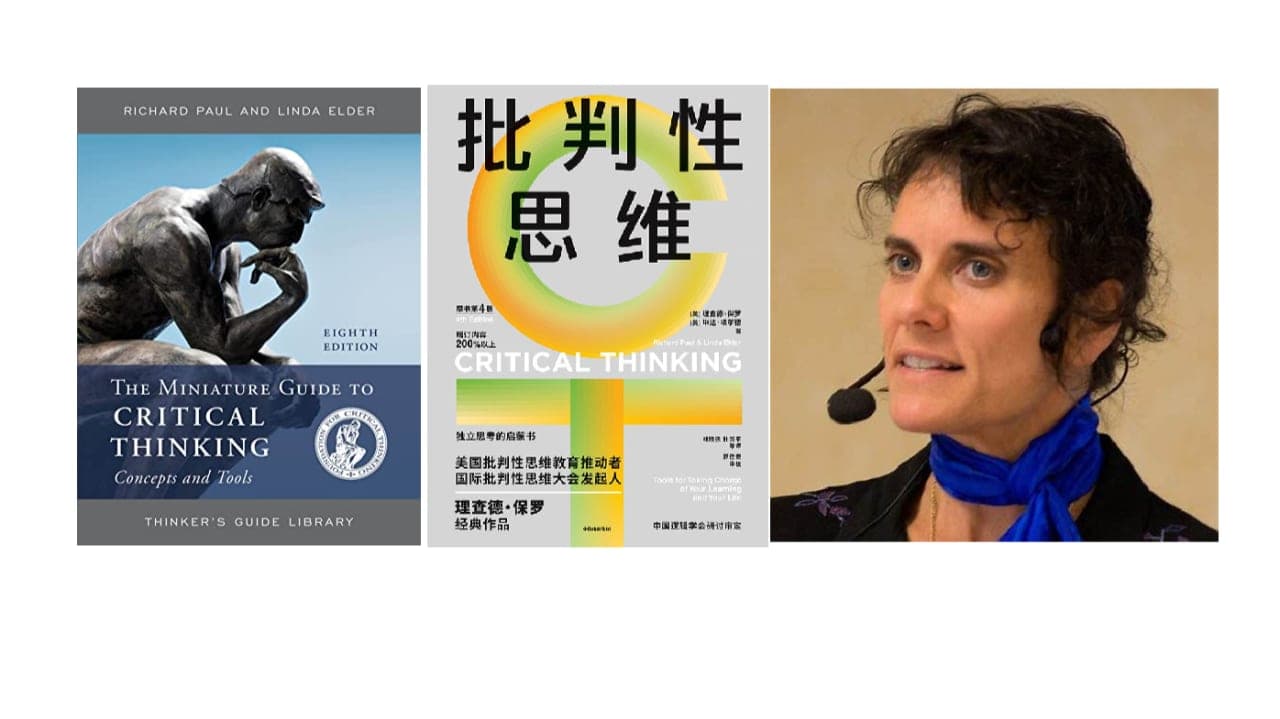
Linda Elder: Tools for Taking Charge of Your Professional and Personal Life
One of the most dazzling paradoxes of modern life is this: the more we talk about critical thinking, the less we seem to do it.
One of the most dazzling paradoxes of modern life is this: the more we talk about critical thinking, the less we seem to do it.
In my recent conversation with Dr. Linda Elder—who, as far as I can tell, has spent more time thinking about thinking than most of us spend thinking about dinner—I found myself both charmed and humbled. Charmed because Linda is one of those rare thinkers who speaks in full philosophical paragraphs without sounding pretentious. Humbled because, as it turns out, I am most certainly not the critical thinker I once fancied myself to be.
And I have the checklist to prove it.
Critical Thinking: Not What You Think It Is
Linda started by peeling the layers of a phrase that has become as comfortably meaningless as “innovation” or “authentic.” We toss around “critical thinking” like it’s a certificate we earned in undergrad—when in fact, it's closer to a lifelong martial art of the mind.
So what is critical thinking? Well, it’s not just about thinking hard. It’s thinking about your thinking while you're thinking, so that your thinking gets better. Yes, it’s that recursive. Like a mirror looking into another mirror. (Prepare for existential vertigo.)
More precisely, it’s the disciplined use of reasoning, guided by standards—clarity, accuracy, relevance, depth, fairness, and more—that help you distinguish what you wish were true from what actually is.
The World’s Favorite Delusion: “I Am a Critical Thinker”
This might have been the most uncomfortable moment of our chat: Linda reminded me that everyone thinks they think well. Unlike tennis or violin—where we’re quickly humbled by rackets or screechy strings—thinking happens privately. So we get away with sloppy reasoning the way some people get away with questionable fashion choices: no one has told them yet.
But self-deception isn’t benign. Linda likens it to an internal tyrant—the egocentric mind—that filters information based on what confirms our biases or protects our self-image. “I am right. Therefore, this information must be wrong.” Sound familiar?
Add to that our sociocentric tendencies—tribal thinking that says, “My group is right. Therefore, your group is wrong”—and you begin to see why no amount of Ivy League degrees guarantees wisdom. Or decency. Just ask the guy from the top university caught running a high-end cheating ring. As Linda put it, “Sophisticated reasoning isn’t the same as fair-minded reasoning.”
That one hit a little too close to home.
The Virtues You Didn’t Learn in School (But Should Have)
We dove into the intellectual virtues described in her book Critical Thinking: Tools for Taking Charge of Your Learning and Your Life. Let me introduce you to a few you may not have practiced lately:
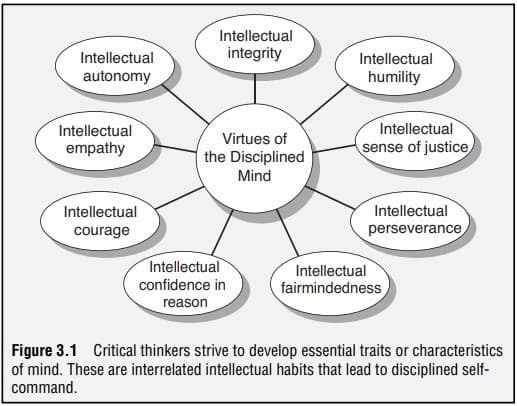
These aren’t checkboxes. They’re muscles. And most of us are out of intellectual shape.
The Stages of a Thinker: Where Are You on the Ladder?
Here’s where it got personal. Linda laid out the stages of thinking development, starting with:
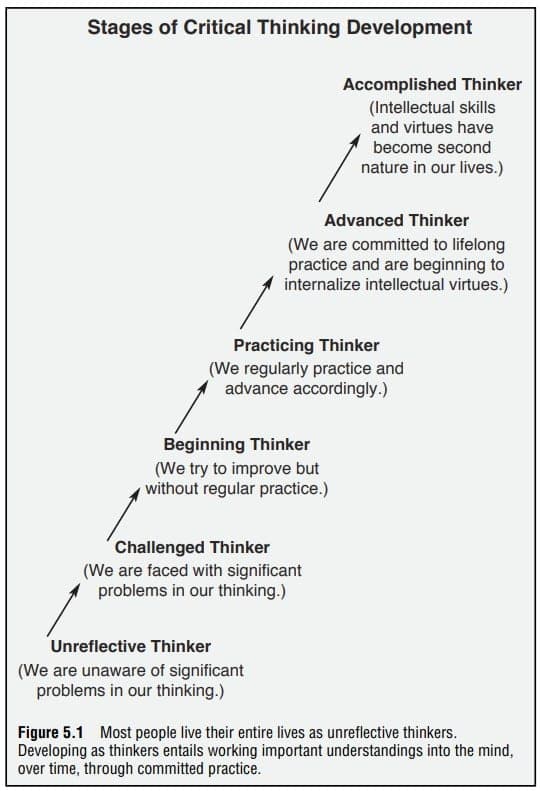
Most of us, myself included, are somewhere between stages 1 and 3—enthusiastic amateurs who can nod sagely while still emotionally defending that WhatsApp group meme like it’s peer-reviewed.
“But Wait,” Says the Skeptic in the Corner…
Someone listening might say, “All this is fine, but cheaters still get rich. Bad actors still win elections. Shouldn’t I just play the game?”
Here’s where Linda turned Socratic on me.
First, she asked: What do you mean by a better life? And suddenly, my mind pulled up images of my younger self sprinting through corporate hallways, chasing things I couldn’t define and rewards that never felt like enough.
More money? More status? Fine. But what about peace of mind? Or self-respect? Or not needing to justify your actions to your own conscience in the middle of the night?
She reminded me that cheaters ask questions, too. But the questions they ask are often cunning, not wise. They focus on how to win, not whether winning is just. And even sociopaths can pass logic tests.
Critical thinking isn’t a trick. It’s a discipline. And like any discipline, it asks something of you.
Fair-Minded Thinking: The Ethical Core
Ultimately, Linda’s conception of a fair-minded thinker reaches far beyond cognitive skill. It’s an ethical stance. A refusal to put your interests above the needs of others—including insects, the Earth, and future generations.
To illustrate, she told a deceptively simple story. You're walking down the street. There’s an ant in your path. Do you walk around it? Or do you crush it?
That, she said, is
“where critical thinking begins: in the everyday, where the ethical meets the practical, and your values are visible in your choices”
Closing the Loop
After the conversation, I sat in silence for a while, unsure if I should reread the book or just rewrite my whole life plan.
I didn’t feel scolded. I felt invited. To pause more. To ask better questions. To treat my thinking like a garden, not a megaphone.
In a world teeming with noisy opinions, critical thinking isn't about speaking louder. It’s about listening more deeply, starting with ourselves.
So here's my plan: less autopilot, more curiosity. Less ego, more empathy. And maybe, just maybe, a bit more mercy for the ant.
Anyone—regardless of background—can develop strong, fair, critical thinking. But it takes work, awareness, and community. Watch the full interview via my Youtube channel: