Johnathan Haidt: The Childhood We Traded for a Screen
Jonathan Haidt said this with the calmness of a man delivering your MRI results. No drama, no pitch, just a psychologist telling the truth as plainly as he can.

““We’re all hurtling forward into this crazy technological world that is harming our children.””
Jonathan Haidt said this with the calmness of a man delivering your MRI results. No drama, no pitch, just a psychologist telling the truth as plainly as he can.
In The Anxious Generation, recently translated into Chinese, 焦虑的一代, Haidt opens with a scene straight out of sci-fi. In the prologue titled “Growing Up on Mars,” he imagines a child being shipped off on a mission to the red planet—without their parents’ consent. The child will be warped, stressed, and reshaped by this alien environment. A little dramatic? Sure. But Haidt’s point is pointed: this is what we’ve done to a generation by handing them smartphones.
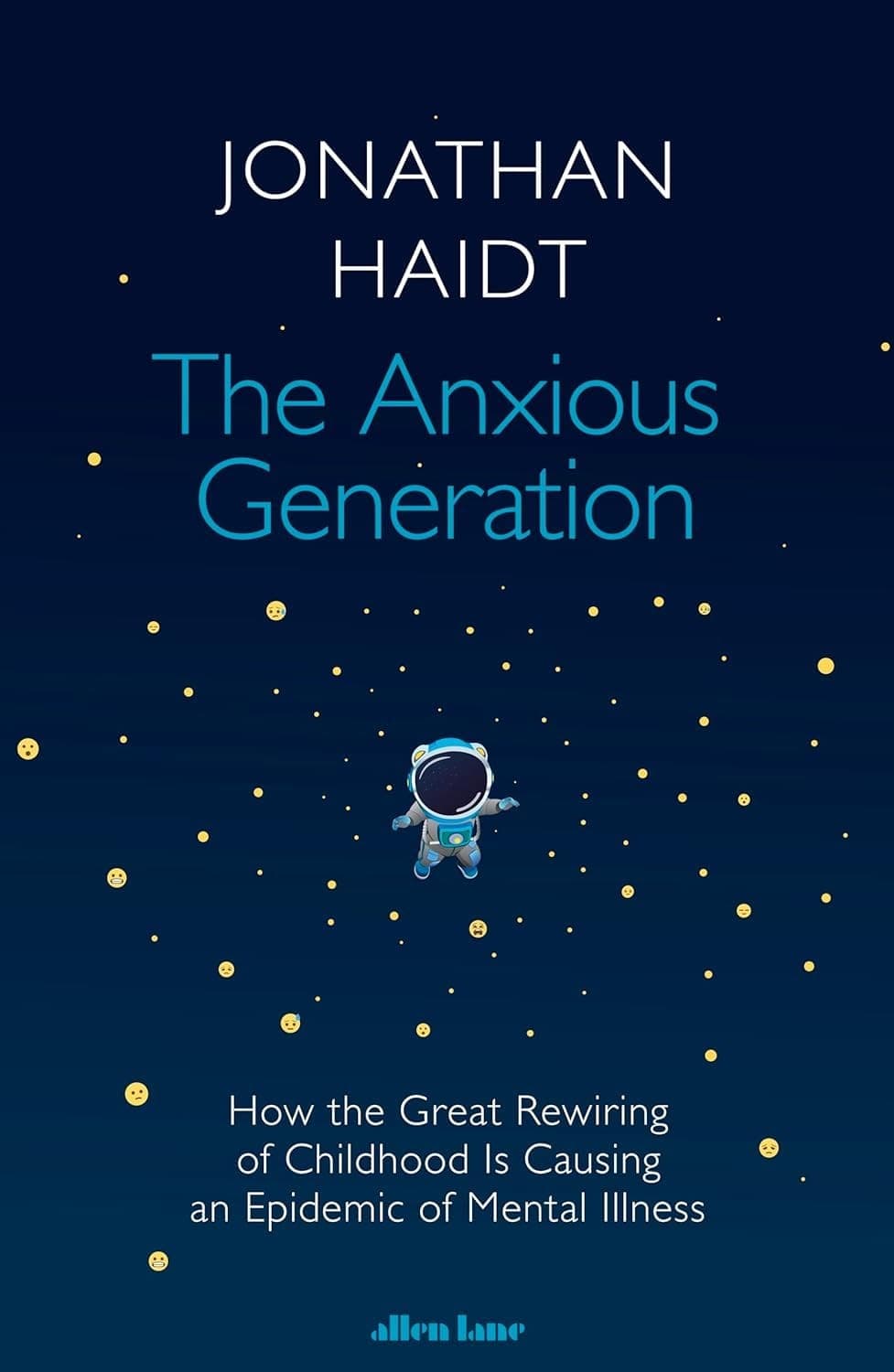
Haidt, a professor of ethical leadership at NYU and a longtime scholar of moral psychology, doesn’t usually write like a futurist. But in this book, he pulls no punches. The real story, he argues, isn’t just about screens or apps—it’s about a massive, unplanned neurological experiment on millions of kids. One that began around 2010 and hasn’t let up since.
The villains? Ubiquitous smartphones, omnipresent social media, always-on gaming, and an attention economy that sees children not as minds to be nurtured, but eyeballs to be monetized.
“This great rewiring of childhood,” Haidt writes, “is the single largest reason for the tidal wave of adolescent mental illness that began in the early 2010s.”
His thesis is stark, and frankly, hard to ignore: four foundational harms—social deprivation, sleep deprivation, attention fragmentation, and addiction—now define daily life for many kids. And all of it started with the promise that a screen would make them smarter, safer, more connected.
Instead, we got loneliness, fragility, and a generation growing up on emotional thin ice.
I had asked him a simple question: How did you, a moral psychologist studying politics and culture, end up writing a bestselling book about anxious teenagers? That sentence above was his answer. Or at least the warm-up.
What followed was one of the most eye-opening, mind-bending conversations I’ve had in a long time—not just about children and screens, but about how we, the adults, quietly let childhood slide off a cliff while we were checking our email.
The book in question is The Anxious Generation, and it’s already sparked public debate, parent revolts, policy proposals, and many late-night internal crises. (Some of them mine.)
But in speaking with Jonathan, I realized something deeper: this book isn’t just a wake-up call. It’s a mirror.
From Democracy’s Decline to Recess Gone Missing
Haidt didn’t start out trying to save childhood. He was trying to save democracy.
Back in 2014, he was watching American public discourse morph into a digital gladiator match. People weren’t just disagreeing—they were melting down. Twitter became a rage machine, Facebook an outrage engine. Political debates felt more like performance art for invisible audiences.
“I wrote this piece called Why the Past 10 Years of American Life Have Been Uniquely Stupid,” he told me, with a grin that said he stood by every word. “And I meant it.”
But as a professor at NYU, Haidt also noticed something odd about his students. They were smart—but fragile. Overwhelmed. Constantly anxious. They weren’t just struggling with ideas; they were struggling with life.
What changed?
Well, almost everything.
Childhood Got a Software Update—And It Was a Downgrade
If you were born before 1995, chances are your childhood involved climbing things, breaking things, losing at games, making up new ones, and staying out just slightly later than your parents would’ve liked.
Now imagine replacing all of that with... notifications.
Haidt calls it “the great rewiring.” Around 2010–2012, we stopped giving kids open-ended play and gave them smartphones instead. No more street soccer. No more spontaneous arguments over whether the slide counts as “base.” No more coming home covered in dirt and mystery bruises.
Instead, kids started performing online 24/7, and childhood quietly became a brand.
“Nobody Wins Jump Rope”
One of my favorite moments in the interview was Haidt talking about play. Not as an optional leisure activity, but as the core curriculum of being human.
“All young mammals play,” he explained. “It’s how they learn everything they need to survive.”
And human kids? They’re no exception.
Boys, he said, tend to prefer games with teams, rules, winners and losers. Girls often gravitate toward synchronized play—jump rope, hand-clapping games, singing. And the point isn’t to win. The point is connection.
“Nobody wins jump rope,” he told me, laughing. “But you come away closer. You bond.”
What replaces that now? Group texts. Instagram likes. Secret Snapchat drama. Endless scrolling. Everyone's together but staring at their own screens. And while we may call it “connecting,” kids are lonelier than ever.
Growing Up Faster? Actually, Slower
You’ve probably heard someone sigh, “Kids grow up so fast these days.” But Haidt doesn’t buy it.
“They look grown-up,” he said, “but they haven’t lived much life.” They’ve been consuming content, not gaining experience. And that matters.
Real maturity, as it turns out, doesn’t come from turning 18. It comes from falling out of trees, getting rejected, solving your own problems, and realizing you’re not the center of the universe. All things you don’t learn while watching TikTok in bed.
In fact, Haidt argues we’ve created a strange paradox: kids who are hyper-aware of beauty filters, adult slang, and viral memes—but emotionally stuck somewhere between third grade and total meltdown.
Four Rules, One Revolution
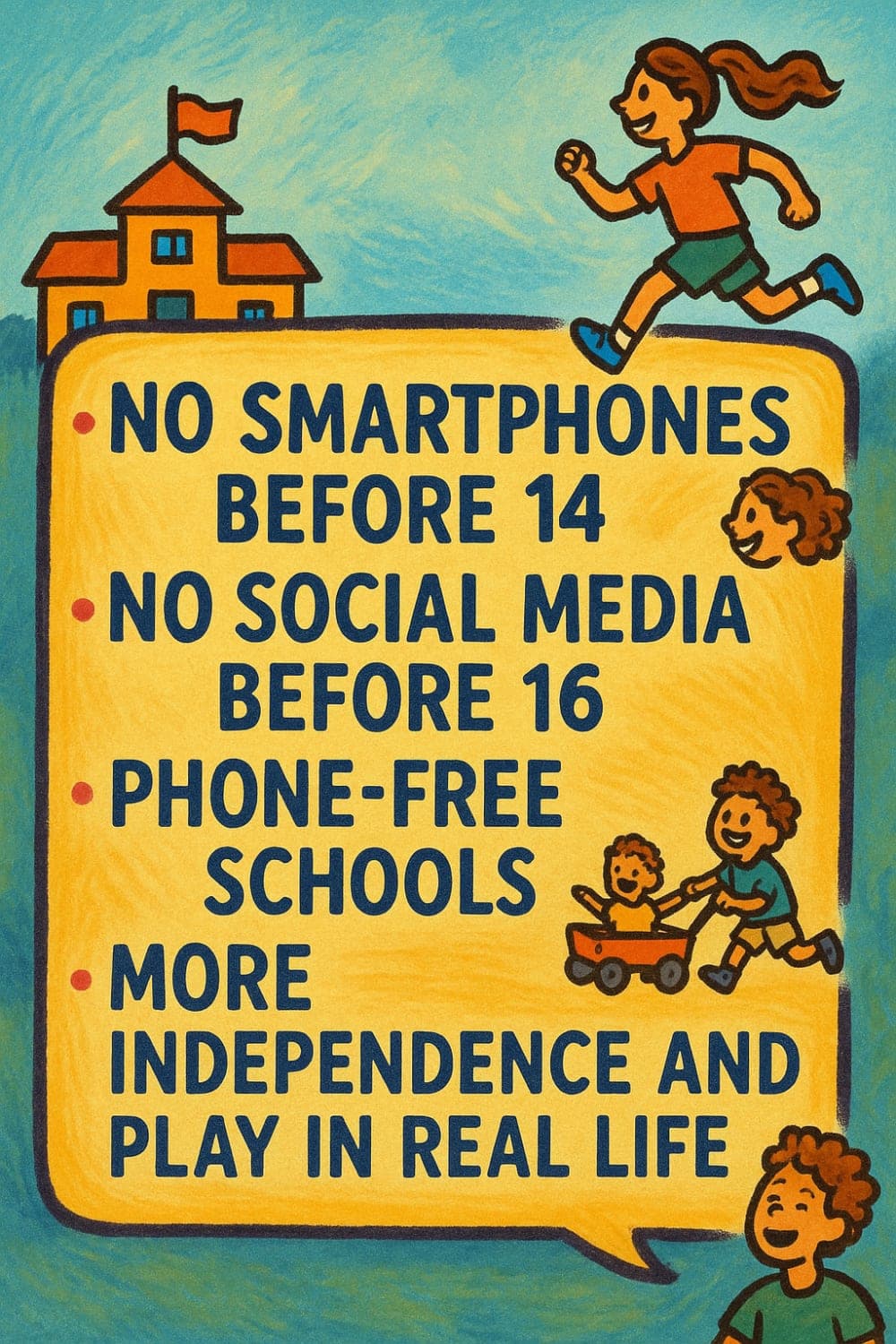
Now, here’s the good news: Haidt doesn’t just shake his head and say “good luck.” He gives parents something better—rules. Or, as he calls them, new norms:
If that list made your palms sweat, don’t worry—you’re not alone.
“But everyone else has one,” your child will say.
“Yes,” Haidt replies, “and if three or four families agree to wait, then your child suddenly isn’t alone anymore.” That’s the magic of what he calls “coordinated withdrawal.” Not going back to the Stone Age—just stepping off the algorithm treadmill, together.
One family starts the trend. Two families make it possible. Three? Now you've got a phone-free posse.
Even the Adults Are Getting Dumber
Lest you think this is just a kid problem, Haidt reminded me: the grown-ups aren’t doing so great either.
“I have trouble reading books now,” he confessed. “I keep checking my phone for no reason.” Sound familiar?
He likens social media to cigarettes—once seen as harmless, even stylish. But eventually we realized: these things are addictive, and they mess with our bodies and minds.
Except this time, the organ getting damaged is our attention span.
“The algorithms are getting smarter,” he said. “And we’re getting dumber.”
Bring Childhood Back to Earth
At the end of our conversation, Haidt returned to a phrase that stuck with me: bring childhood back to Earth.
It sounds simple. But it’s radical.
It means letting kids walk to school. Letting them be bored. Letting them climb something too tall and solve a conflict without an adult moderating like a hostage negotiator. It means remembering that growing up is a process, not a performance.
And maybe—just maybe—it means putting our own phones down long enough to show them how.
Because the truth is, childhood was never supposed to be optimized. It was supposed to be lived.
And the best part? Nobody wins jump rope. But everybody grows.
Maybe you have enjoyed the conversation so far, how about visiting my youtube channel and watch our full conversation, witty and thoughtful, for you who has a child , was a child or still wants to stay as a child.