Japan Observation: A Society Full of Contradictions
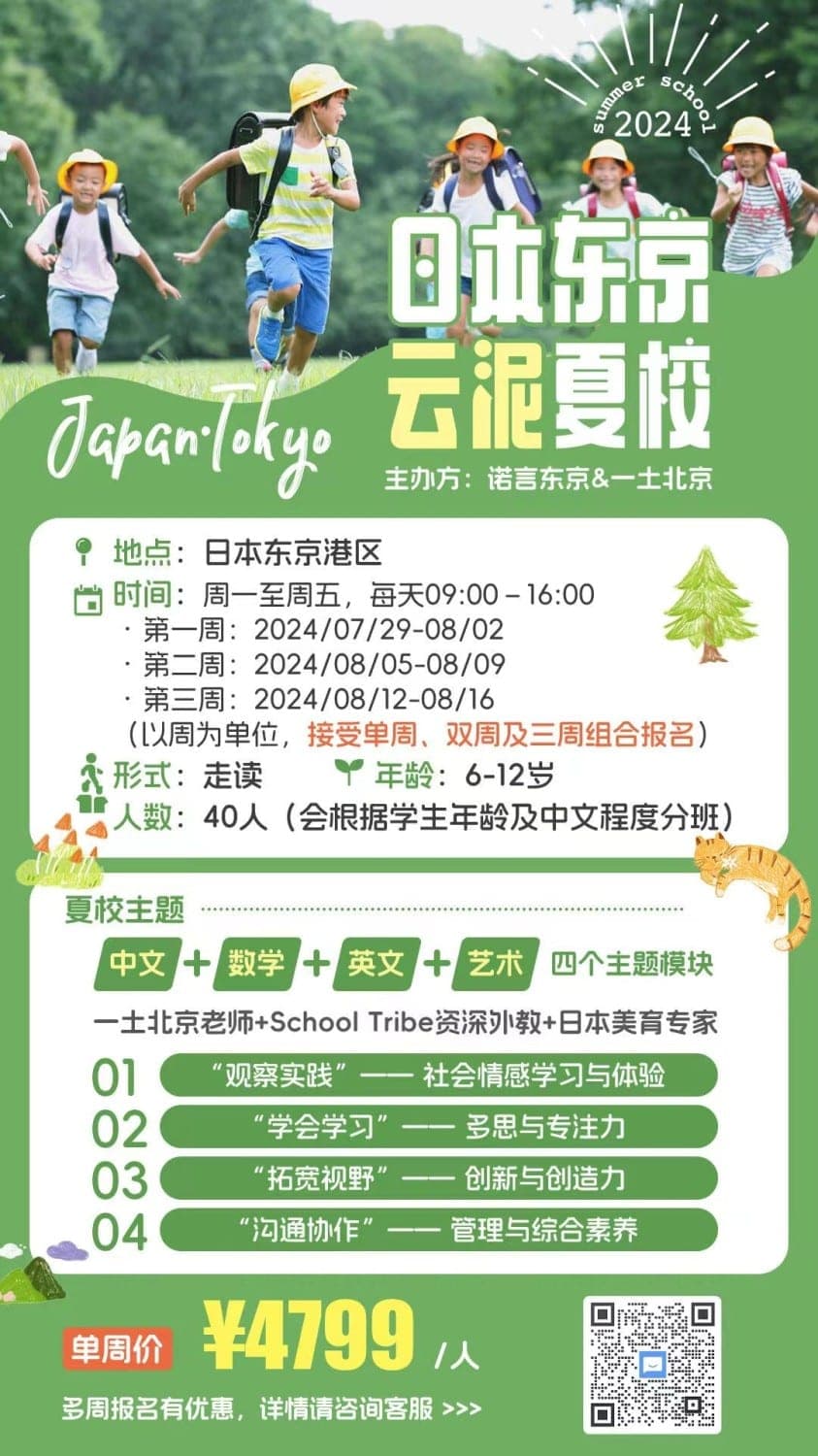
It has been exactly one year since I came to Japan from the United States. The cherry blossoms by the Kamo River in spring, the fireworks in Atami in summer, the autumn leaves in Kamikochi in fall, and the snow-covered landscapes of Hokkaido in winter. Now, the cherry blossoms are about to bloom again, and before I knew it, I have experienced a full cycle of the four seasons.
“This article was first published in *Caixin Weekly*, Issue 13, April 1, 2024.”
It has been exactly one year since I came to Japan from the United States. The cherry blossoms by the Kamo River in spring, the fireworks in Atami in summer, the autumn leaves in Kamikochi in fall, and the snow-covered landscapes of Hokkaido in winter. Now, the cherry blossoms are about to bloom again, and before I knew it, I have experienced a full cycle of the four seasons.
I've thought about writing something, but being new here, I'm afraid whatever I write might come across as naive and inexperienced. By the time I become familiar with things, I’ve lost the urge to pick up the pen. A year feels like a long time to me, but as I meet more people, I realize there are many who have lived here for twenty or thirty years, deeply rooted in various fields. Compared to their insights, what I observe might just be superficial common knowledge. So, what does a year really mean?
When is the right time to write about the impression of a place? If you stay too briefly, it’s hard to write well; if you stay too long, it’s hard to write at all—truly a contradictory and draining dilemma. If a pretext is needed, perhaps "one year" could serve as one—neither too long nor too short, neither too deep nor too shallow.
This year, thanks to my work as a visiting scholar, I had the opportunity to visit eight different prefectures across Japan, from south to north, and over 20 different schools—ranging from public to private, from kindergartens to universities, and from mainstream schools under the Ministry of Education to innovative institutions and "marginal" schools supporting children with disabilities. Due to my identity as a "pseudo-scholar," I also had the chance to engage in deep conversations with outstanding Japanese thinkers. Additionally, as a single parent raising three children in Tokyo, I experienced every aspect of daily life—from ward offices and hospitals to clinics, police stations, banks, post offices, and delivery centers. Having lived in both China and the United States for 20 years each, worked in various fields, and now navigating Japan as a "foreigner," I maintain the "privilege" of observing this society as an outsider. All of this combined may offer readers some valuable perspectives.
If I had to describe my feelings about Japan in one word, "contradiction" might be the most fitting.
Contradiction One: Attentive to Every Detail Yet Blind to Others
A few days ago, an American friend brought their 6-year-old child to Japan for a visit and stayed temporarily at a friend's apartment.
It was their first time in Japan, so I provided online guidance: how to use a Japanese-style bathroom; the purpose of the many buttons at the entrance; why the washing machine has a button labeled "bathwater"; what the fish grill on the kitchen stove is, and where the knives are hidden. Of course, there was also the matter of sorting garbage into six categories—how to separate it and how to dispose of it. In a small two-bedroom apartment, where were all the neatly organized and stored items hidden?
The little one was coughing a bit, so I told her that within a 3-minute walk downstairs, there's a drugstore; within 5 minutes, there are convenience stores—two 7-Elevens and one Lawson; within 8 minutes, there are two 100-yen shops (my favorite!), along with various small restaurants. Of course, there are also subway and bus options to get to all the places I recommended.
My friend exclaimed from the other side of the video, "Wow, that's so convenient!"
In March 2023, I came to Japan as a visiting scholar with my children. A single flight brought us to such a different world, a stark contrast to the rural life on the West Coast of the United States. One was open and tranquil, the other bustling and crowded. Skyscrapers were everywhere, along with crowds of office workers and izakayas still open at 5 a.m. Compared to the super fuel-guzzling large pickup trucks driven by American neighbors, cars in Tokyo looked like slimmed-down toy cars. These scenes collided abruptly with the work and life I was once familiar with, seemingly seamlessly reconnecting with the life that had been interrupted by the pandemic. Of course, it was only a semblance.
The children don't have the long memories and points of comparison that I do. Taking them on the Yurikamome Line at night, the train weaves through brightly lit skyscrapers. The sea, buildings, ships, and lights rapidly alternate, appearing and receding in a dizzying display, as if we’ve entered a sci-fi movie. Beneath our feet, there are exquisite little shops everywhere, clean and tidy, with everyone polite and courteous. Sometimes, walking through these places, I feel as though I’ve passed through an entire street of wax museums—from the people to the goods to the food, everything feels unreal. Especially the food. I’ve always wondered why Japanese cuisine, so beautifully presented, looks so unreal. It wasn’t until one day that I realized it’s because Japanese food doesn’t "waft with fragrance." It has color to the eye and flavor to the palate, but it lacks that pervasive aroma.
Thinking back to a year ago, when I first arrived, everything seemed new and fascinating. From the kitchen cutting boards that could stand on their own, to the variety of goods and services in convenience stores, the single-serving vegetables in supermarkets, and the small tools in 100-yen shops for cleaning every nook and cranny... And of course, the warm, heated bidet toilet seats installed everywhere!
Back then, I often exclaimed, "Wow!" too, but my local friends would always look puzzled—isn't this how it is everywhere? Shouldn't it be like this? In just one year, I had grown accustomed to everything. When my friends exclaimed in amazement, I became the calm one.
Japanese society offers meticulous care at multiple levels. The first level is product design, especially in consumer goods. Every detail of daily life—eating, drinking, sleeping, and even personal needs—has super user-friendly products. These designs are not only exquisitely crafted and aesthetically pleasing but also convenient and practical, often featuring clever ideas you wouldn’t even think of. For example, the curry rice I bought at 7-Eleven came with instructions on how to fold the box to create a stand. When placed in the microwave, it heats at an angle, allowing steam to escape easily. The design truly reflects ingenuity and thoughtful craftsmanship.
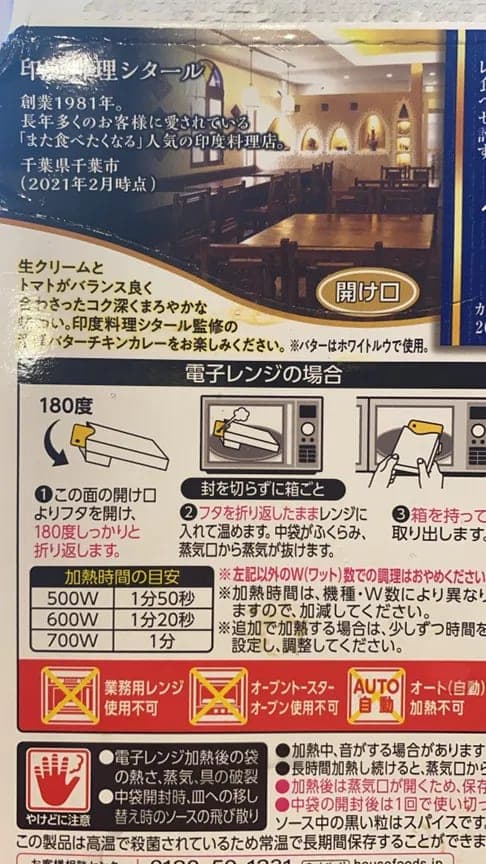
Similar examples are everywhere, too numerous to count. I think if I were to study product design in Japan, I would probably feel constantly overwhelmed every day.
The second level is meticulous physical examinations and medical care. Many friends have probably heard about the humanization and advancement of Japan's medical system, where everything from check-ups to dentistry, pediatrics, emergency care, and surgery is handled with meticulous attention. I remember a friend from the Promise community saying that when their father came from Shanghai to Japan for treatment, they realized that here, you can express pain during treatment, and hospitalization can be comfortable. Hearing this was truly heartbreaking. On the other hand, I saw a story shared about how in maternity hospitals, even without anesthesia, Japanese women give birth quietly, without making a sound. And not making a sound definitely doesn’t mean they aren’t in pain! This is also a contradiction, isn’t it?
The third level is a meticulous service-oriented government. When you go to the district office to handle procedures, everyone serves you diligently, meticulously, and with a friendly attitude. If your forms don’t quite meet the requirements, they will try their best to find a solution for you. It’s clear that this is a place where power cannot be exercised arbitrarily. A small example: as a foreigner, you will receive a thick booklet available in English, Chinese, Japanese, and Korean, which clearly explains everything from emergency services to waste sorting, and from community services to free health check-ups.
On the other hand, if I were to say that Japan is also "looking down on everyone," you might be quite surprised—how could that be? Why?
The principal at my children's American school is a Japanese-American who moved to the United States from Japan as an adult. Last year, when I told her I was planning to visit Japan, I expected her to proudly introduce me to her home country. Instead, she asked me, "Why would you want to go to Japan, a place that suffocates the soul?!" After talking with her, I realized how invisible and suppressed a career-driven woman—and a mother of two girls—can feel in Japanese society. It was only after that conversation that I truly understood what Professor Chizuko Ueno describes in her books: Japanese women face deeply entrenched, multi-layered structural challenges that have persisted for decades without significant improvement.
According to the Global Gender Gap Index (GGGI), Japan ranks 125th out of 146 countries and regions in terms of gender equality, the lowest among developed nations (China ranks 106th). Structural inequalities against women are pervasive in society, spanning from education and employment to wages, promotions, and social welfare. Another "normalized" aspect of Japanese society is the disregard for women.
In the NuoYou group, someone asked: A friend's child is 15 years old and wants to study in Japan. Is it possible? The group admin couldn't answer whether it's possible or not without first knowing whether it's a boy or a girl. For boys, boys' schools can be considered, while there aren't as many options for girls. If attending a coeducational school (such as some university-affiliated high schools), girls need to achieve much higher grades than boys to have the same opportunities, and this is a widely accepted fact in Japan. Boys' schools have clear advantages. In the 2022 University of Tokyo freshman admissions, among the top 20 schools ranked by the number of admitted students, 14 were boys' high schools. If admitted to certain boys' schools, the acceptance rate to the University of Tokyo can be as high as 50%.
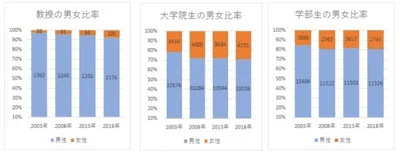
The proportion of female admissions in Japan's top universities is extremely low. In "prestigious schools" like the University of Tokyo and Kyoto University, the female admission rate is around 20%, which includes humanities majors. In fact, the proportion of female students in science and engineering majors is only about 10%. You might argue that these are science and engineering universities, so it's normal for the female ratio to be low. However, looking globally, the Massachusetts Institute of Technology in the United States, also a science and engineering university, has a female admission rate of 47%. Even at China's Tsinghua University, women account for 35%.
Among the member countries of the Organisation for Economic Co-operation and Development (OECD), Japan has the lowest proportion of female graduates in science, technology, engineering, and mathematics (STEM) fields. This disparity is so pronounced that a friend once remarked that dining in the cafeteria at the University of Tokyo feels like stepping into a boys' dormitory.
Around 2018, a scandal broke out revealing that more than a dozen universities had engaged in underhanded practices to deliberately lower the scores of female applicants, preventing them from being admitted. Although these cases were exposed and the affected female students received compensation, by 2024, it remains an accepted consensus that girls, despite scoring higher than boys, are still disadvantaged in the admissions process. Even more absurdly, it is still a widely held social belief that if a girl is admitted to prestigious universities like the University of Tokyo, she may be considered too intelligent to find a husband, as women are still largely expected to prioritize domestic roles.
In March 2024, U.S. Senator Katie Britt of Alabama delivered an emotional rebuttal speech in her kitchen, adopting the persona of a "stay-at-home woman" to appeal to female voters following President Biden's State of the Union address. However, her portrayal, which evoked a stereotypical 1960s image of women in the kitchen, drew widespread mockery across the American political spectrum, from left to right. This even led to a viral parody performance by Scarlett Johansson. In contrast, in Japan in 2024, the societal role of women staying at home is not only free from criticism but is highly praised. The disparity is astonishing.

The situation mentioned above only pertains to students; the number of female professors in universities is even lower! Although it is claimed to be "increasing year by year," it still remains below 20%.
On one hand, Japan is a democratic constitutional state with a service-oriented government, a developed service industry, and a market economy, and it enacted gender equality legislation as early as 1985. On the other hand, there is a widespread social consensus regarding the obvious unfairness toward women in education, which is truly perplexing.
Contradiction 2: Child-Friendliness vs. Educational Distortion
It can be said that Japan is a model of a child-friendly society. If you go out early in the morning, you'll see many six- or seven-year-old children walking on the sidewalks, in subway stations, and on buses, carrying their own backpacks to school. Every time I see this, I'm amazed, and I still am to this day.
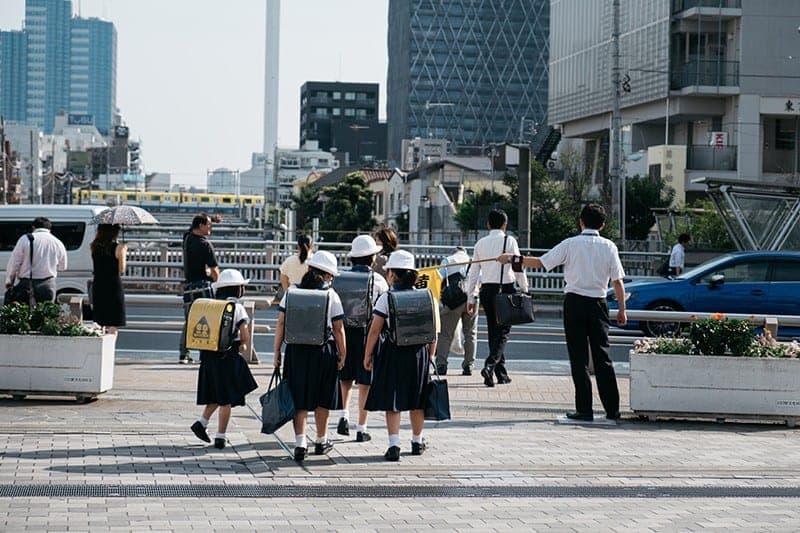
Many of you have probably seen on various social media platforms how Japanese kindergartens and elementary schools emphasize children's physical and mental development, from various life skills to outdoor activities, and this educational approach has a long history. I visited the former site of Meirin Elementary School in Hagi City, Yamaguchi Prefecture, which is about a six-hour Shinkansen ride from Tokyo, and saw a school sports day from 80 years ago. Boys and girls were running and jumping barefoot on the dirt playground, participating in various competitions.
For children with physical disabilities, the educational provisions are even more admirable. Families can essentially receive excellent care and education for their children at no cost. During my visit to an organization in Tokyo that provides support and services for people with disabilities, I saw that the school building was a renovated former elementary school. A renowned restaurant provides recipes, and people with disabilities bake and sell cookies, which not only generates income but also promotes their philosophy. I know a doctoral student studying design whose research focuses on special clothing for children with serious illnesses. These children may require tubes inserted into different parts of their bodies, and the challenge is to make the clothing both functional and aesthetically pleasing so that the children are willing to wear it. The existence of such specialized professions and industries offers a glimpse into the comprehensive social support system behind it all.
Such a system first requires substantial financial resources from the government, as well as a societal consensus on inclusivity and support for vulnerable groups. With these two prerequisites in place, there must also be a sufficient number of professional institutions and nonprofit organizations.
As a former breastfeeding mother, I also feel a sense of warmth when I see the ubiquitous nursing rooms in Japan. In shopping malls, train stations, and museums, I have encountered the most well-equipped nursing rooms in the world, complete with machines for sterilizing breast pumps, hot water, and comfortable sofas. Public restrooms are also equipped with safety seats for infants, making it convenient for mothers with young children to use the facilities.
Japan's forest schools are also world-class in nature education. ETU School has long-term collaborations with Japanese nature schools, and we have learned so much from their institutions and teachers.
However, if you are a "normal" child, Japanese education also has a highly distorted side. This is what Chinese people are familiar with as "involution," to the extent that there is a specific term for it called "educational abuse."
In March 2023, a first-year student at Kyushu University, who lived in Tosu City, Saga Prefecture, killed his parents. The reason was that he had long suffered from educational abuse by his parents. Whenever he made a mistake, he would be severely scolded; if his grades were poor, he would be forced to kneel in a formal sitting position for over an hour while being lectured. Even if he finished his homework before playing, his father would scold him for not studying. In an act of revenge, the student stabbed both of his parents to death.
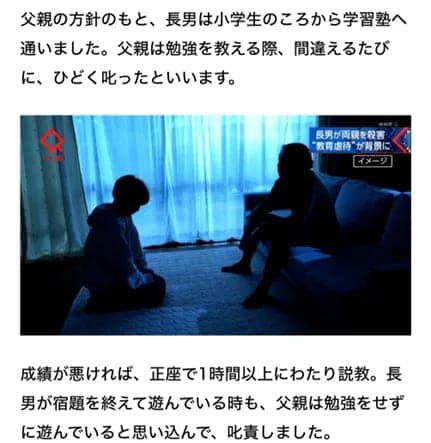
The term "educational abuse" was introduced in 2011 by the Japanese Society for the Prevention of Child Abuse. It refers to actions taken in the name of education that cause harm to children, such as pressuring them to study beyond their maximum tolerance, disregarding their wishes, and excessively interfering with their academic performance and future prospects. Society has also engaged in extensive discussions on the distinction between "educational abuse" and "educational enthusiasm," helping adults clearly understand the differences between the two.
——Educational Abuse: Treating children as one's own creation; the child's and one's own success are extremely important; what one believes is good is held with unwavering conviction.
—— Passion for Education: Views the child as an independent individual; cares about whether the child is happy; if one path doesn't work, will choose another route.
In 2019, the United Nations Committee on the Rights of the Child issued recommendations to Japan for improvement: an excessively competitive system and high-pressure school environment; the competitive nature of society is detrimental to children's development.
The impact of educational abuse is long-lasting. Among children who experienced educational abuse in their childhood, approximately 65% continue to receive treatment even as adults, with some even developing "Complex Post-Traumatic Stress Disorder." Therefore, such intense competition comes at a tremendous cost to both society and individuals.
Looking at these data from Japan, I have a very conflicted mindset. On one hand, the data is quite dismal; on the other hand, at least there is data, and it is very detailed, with reports, media exposure, and normal public discussion. This is also a necessary condition for the situation to improve, though it is far from sufficient.
I visited a very ordinary public elementary school outside of Tokyo and asked the teacher how many children attended private tutoring classes after school. The teacher sighed and said, "80%."
You might have the same question I had back then: With Japan's public education being so good, why would anyone need to attend cram schools?
Because I need to get into a better middle school, and each middle school tests different content that isn't taught in public elementary schools. If I get into certain middle schools, the chances of attending a prestigious high school are much higher, as graduates from prestigious schools have the greatest likelihood of entering large corporations. These corporations largely operate under an unwritten system of lifetime employment, and the combined benefits—social recognition, welfare, and other perks—are advantages that graduates from less prestigious schools can never surpass in their lifetime.
Therefore, working backwards step by step, children need to start extracurricular tutoring as early as the third grade of elementary school. To secure a spot, many begin in the first grade, and some even earlier, taking exams as early as kindergarten. After school, students go home for a short break, then spend their evenings from 5:30 to 8:00 at tutoring centers. They bring their own dinner and heat it up during breaks.
I once pretended to be a parent and visited a top-tier tutoring center. After noon, before the students arrived, I asked if I could take a look at the classrooms and was allowed to view the surveillance footage. The moment I saw the monitors, a chill ran down my spine: five or six screens, each facing a classroom, and every classroom looked like an oversized prison cell—no windows, plain white walls, not a single decoration, with two rows of perfectly aligned desks and chairs. From an environmental design perspective, it was clearly not meant for children.
All staff at the tutoring center wear black suits and ties, clearly resembling an industrial product. As many Chinese parents are familiar with, they employ numerous methods to make parents and children buy courses out of anxiety. The tutoring center holds monthly exams and adjusts seating based on performance. To maintain their grades, children not only attend classes on weekday evenings but also participate in tutoring during spring break, summer vacation, and winter vacation, all in pursuit of "getting a head start in life."
This is a social structural issue that gives rise to "educational abuse."
Japanese society has many discussions, and there are also works such as novels that address the harm this causes to children and families. Not only are tuition fees expensive (cram school costs are as high as a year's tuition at a private school), but children also suffer immensely. Issues such as school refusal among teenagers, depression, and school bullying are common problems.
In the summer of 2023, I had a dedicated discussion with Samuel E. Abrams, the author of "The Boundaries of Educational Marketization," on the social norms and policy issues behind these phenomena. Those interested can watch the live stream replay.
Another statistic is also worth noting. Chinese nationals account for about 1% of Japan's total population, but in a top-tier cram school, Chinese children make up 25%. For Chinese people, no matter how intense Japan's "competition" may be, it is certainly not as severe as in China. So, many Chinese people's first reaction is, "Oh, 'competition'? We're familiar with that, we're good at it, and we can outdo the Japanese at it!" But if the goal is to engage in such intense competition, why come to Japan? Why not stay in Beijing's Huangzhuang and compete there? If Japan becomes as fiercely competitive as Huangzhuang, is that really what one wants to pursue?
Of course, individuals are, to some extent, victims. Without addressing systemic issues, many individuals lack the resources to fight back.
However, even in such circumstances, is there a choice? The answer is, there always is.
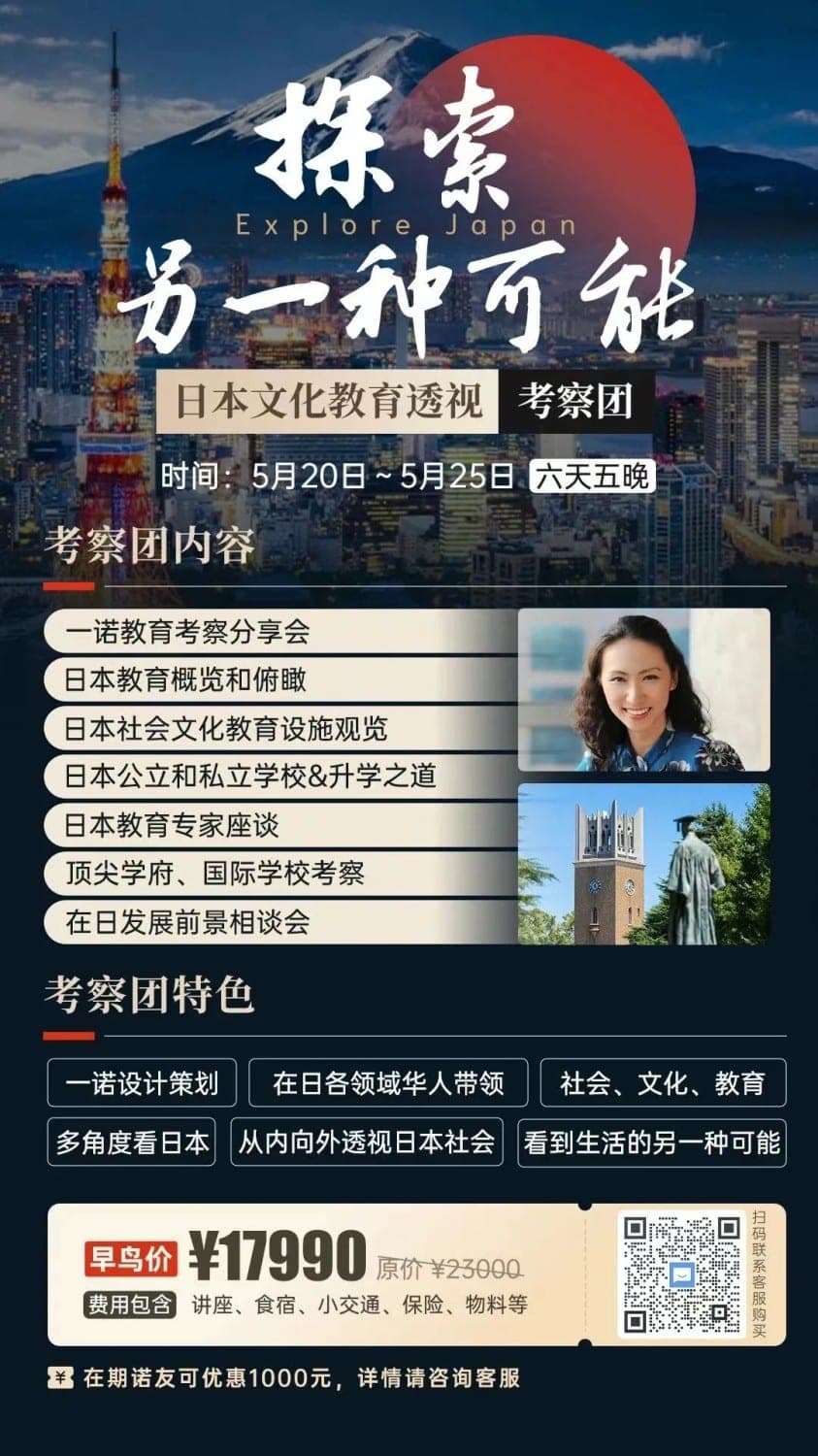
In May of this year, I will organize a cultural and educational study tour to Japan. Together with friends who have lived in Japan for over 20 years and local Japanese people, we will "see through Japan" by exploring its society, culture, and education. Our guides include a Doctor of Education, women who have worked and started businesses in Japan for many years, family members of Japanese individuals with extensive experience in Japanese government work, and full-time mothers who have raised their children in Japan. Senior friends will share their experiences and insights on their children’s different educational paths.
You can learn more details and sign up through the poster below.
The upcoming summer camp is designed for Chinese children aged 6 to 12 living in Japan, and it also welcomes friends who wish to bring their children to Japan for the summer. The design of the summer camp is closely related to the strengths and challenges I have observed in Japanese education. How can Chinese children learn the positive aspects of Japanese education while avoiding its shortcomings? The camp will be conducted primarily in Chinese and English, with a team of teachers consisting of educators from Beijing’s Yitu School, foreign teachers based in Japan, and art education experts.
You can learn more details and register through the poster below.