In July, Begin to Reexamine life (2)
Today’s article connects with the workshop I’ll be leading from July 13th to 17th on Japan’s Kumano Kodo trail—a journey of walking, reflection, and reconnection with what truly matters.

Today’s article connects with the workshop I’ll be leading from July 13th to 17th on Japan’s Kumano Kodo trail—a journey of walking, reflection, and reconnection with what truly matters.
To catch up on last week’s discussion, see In July, Begin to Reexamine life (1)
Building the Inner Map
In the Nuoyan 4.0: Inner Construction course, building an inner map means exploring your own state—exploring what the map of your inner world looks like.
We live in two worlds at the same time: the external world and the internal world. The external world is a city, a neighborhood, a house, a company, and so on— if you want to go somewhere, you can just check a map. But do we have such a map for our internal world? For example, if I feel deeply discouraged today, how do I stop feeling that way? Where is my destination, and how do I get there? The voices in our mind—that's our inner world, but we often don’t have a map for it. We tend to be in a confused and foggy state.
There’s an interesting term for this state: monkey mind— like a monkey, the mind is jumping around with countless thoughts. At that moment, you don’t really know where to go.
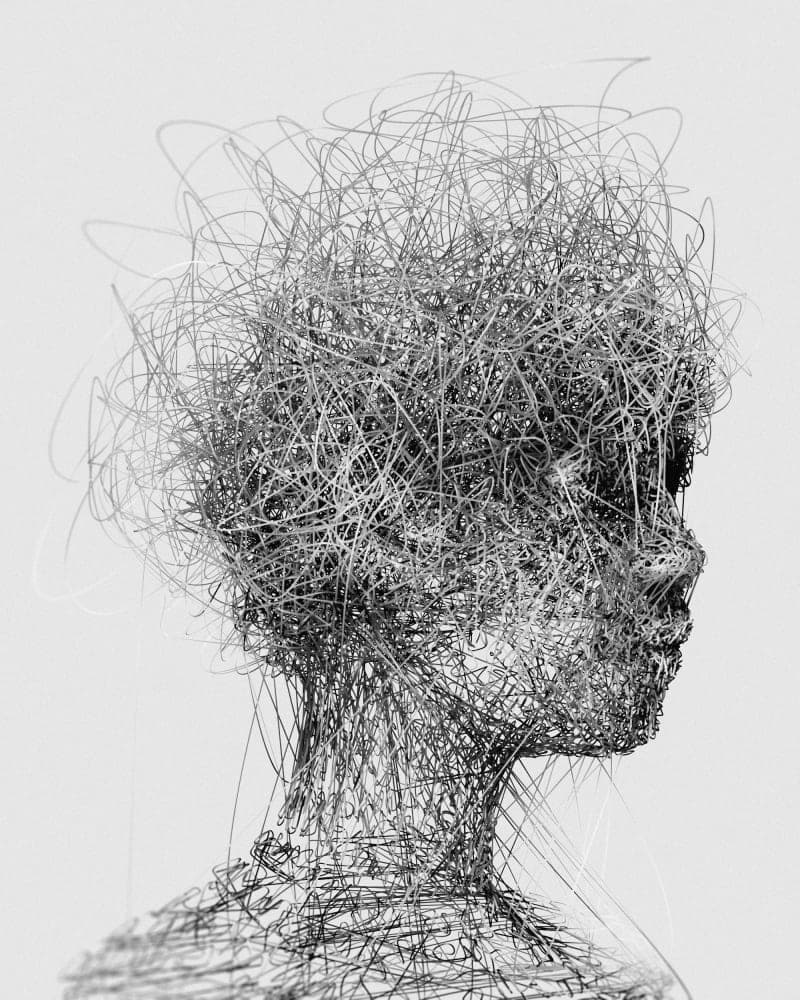
Going back to what we said earlier about “reexamining your life,” to “examine life” doesn’t mean looking at the furniture in your room or other parts of the external world. It means examining what’s underneath—your inner being.
As Teacher Huang Shiming once said, gazing has a certain power— when you focus your attention on something, you’re giving it energy. In other words, when we sincerely examine something, the very act of examining causes it to begin changing. The monkey mind is the same: our act of observing it is, in itself, a chance to create change. So don’t underestimate the power of reflection.
We all know that habits are hard to form—especially for adults. Surface-level habits are hard to build because there’s been no shift at the being level. When the being changes, you’ll find that you don’t need to force habit formation at the doing or having level. Your being will tell you what to do.
Like any habit, self-reflection requires a few key conditions:
First: your own awareness. Be grateful that you have the awareness and the will to begin. There are methods for self-reflection, but the process can only begin if you’re internally motivated.
Second: a supportive environment. A supportive environment means the people around you recognize the value of reflection. I once wrote an article about how the most important parts of education are often invisible.
And life is no different—the most important work we do in life is often invisible. Self-examination holds tremendous meaning. And it too needs a supportive environment.
The third is time and deliberate practice. What I can do is help loosen the soil a bit for everyone— it’s a continuous process. In this process, deliberate practice and habit formation are also very important.
I believe everyone has the ability to become a radiant, extraordinary version of themselves.

Four Inner Principles for Building the Self
When it comes to inner development, here are four phrases I’d like to share.
The first is: You have all you need to lead a wildly successful and meaningful life. You already possess everything you need— and this is a very important belief to hold.
The second is: The most powerful tool we have towards the world is our intention. As mentioned earlier, reflection is really about examining where we place our intention. Wherever our intention goes, light follows— our intention is like a flashlight.
The third is: True changes only happen when we let go of our memory and past. Take myself as an example: Most people know I studied at Tsinghua in China, earned a PhD in the U.S., and worked at McKinsey and the Gates Foundation— but that’s all in the past. It has nothing to do with who I am today. If I continue to live in that world, I’ll never be able to become a new kind of creator.
In truth, to let go of our memory and past—to release our former selves, past experiences, and possessions— is easy to say, but very hard to do. Most of us, in fact, live within our own memories and past. You need to realize: if you don’t let go, true transformation will never happen.
The final phrase is: If you want to receive something, give it first. We often want to have more— but it’s hard for us to give. If we understand the world through the laws of physics, then if I have 100 things and give away 20, I’m left with 80. That’s the law of physics. But the laws of life work the other way around: when you give 20, you might receive 80 in return.
Even though we all understand sayings like “blessings come to those who bless others,” it’s still very hard to put into practice. We often think: “Take as much as you can, give as little as possible.”
I believe a key part of personal growth is breaking out of this physics-based mindset. For example, if you want others to treat you kindly or understand you, then you must first try to understand them. And once you begin trying to understand others, you’ll realize they face problems and challenges you’d never even noticed before.
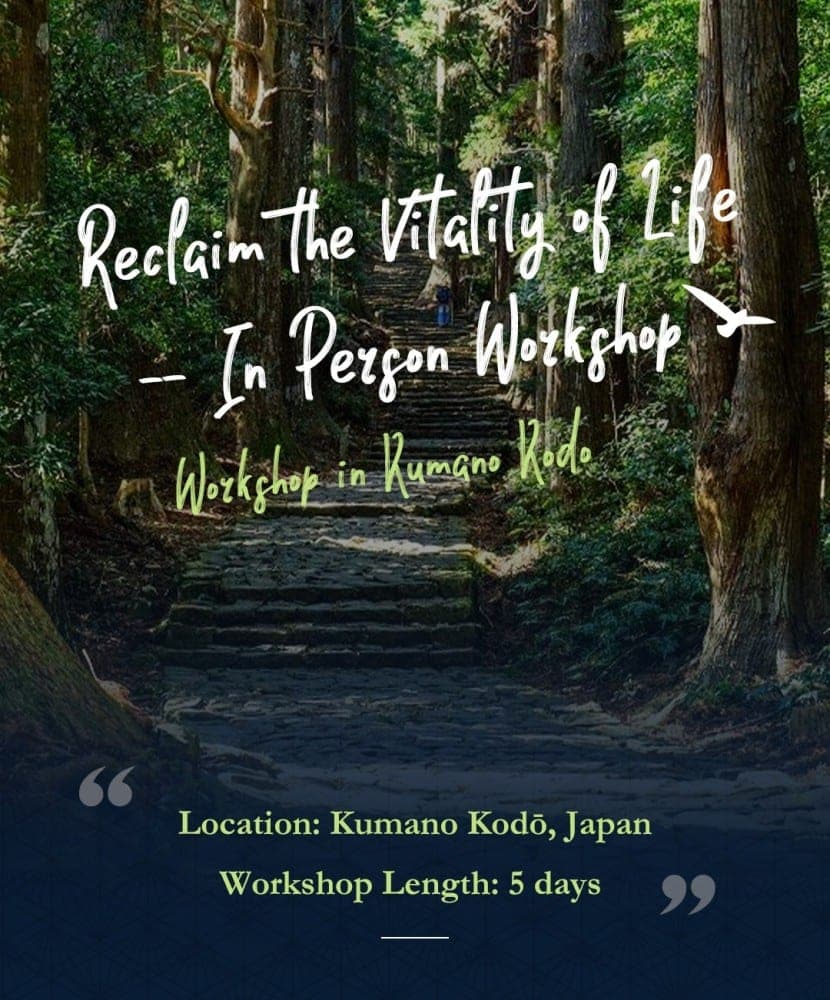
From July 13 to 17, 2025, I’ll be hosting a five-day, four-night in-person workshop on the thousand-year-old Kumano Kodo pilgrimage trail in Japan.
We’ll walk the ancient path together, surrounded by nature’s quiet power— taking in the forest, the air, the rhythm of our own steps. Through reflection and honest conversation, you’ll have space to recharge, reconnect, and come home to yourself.
““Each of us is a deep ocean. When we focus only on our practical, day-to-day roles, something inside us falls out of balance. That’s why we need to return to nature—because we are nature. And we need deep connection with others—because we’re built for it.””
For more information, please check my website
https://yinuoli.org/product/2025-immersive-workshop-kumano-kodo/
Or reach out to my devoted customer service team at info@yinuoli.org. They’ll be happy to help.